Why this desert route needs more than a quick turnaround
The Marrakech to Merzouga route is one of the most memorable road trips in Morocco, but only when you give it enough time. The fast two-night tours exist, and people book them when time is extremely limited, but I would avoid them if you can. Four to five days makes far more sense because the journey through the High Atlas, Aït Ben Haddou, the southern valleys and finally the dunes is not dead transit—it is the experience.
The biggest mistake people make is treating Merzouga as the only destination and everything before it as a necessary inconvenience. The route works when each section gets proper time rather than becoming a rushed photo stop timed around a bus schedule.
How long does the Marrakech to Merzouga drive actually take?
On a map, Marrakech and Merzouga can look deceptively close. In practice, the road journey takes much longer than the straight-line impression suggests because it crosses mountain passes, winds through valleys and passes through towns where traffic slows.
I would never attempt this route in one straight push unless circumstances forced it. Trying to drive from Marrakech to Merzouga in a single day turns a beautiful road trip into an exhausting test of endurance. The sensible approach is to break the route into stages, sleeping at Aït Ben Haddou or Ouarzazate on night one, somewhere around Dades or Todra on night two, and reaching Merzouga on day three.
Mountain driving, village traffic, roadworks, fuel stops and the simple fact that you will want to get out of the vehicle more than once all extend journey times beyond what navigation apps predict.
Day 1: Marrakech through the High Atlas to Aït Ben Haddou
I would leave Marrakech early and take the Tizi n'Tichka pass slowly. The High Atlas crossing is beautiful, but the road demands attention. Bends, gradients and slower vehicles mean the average speed drops significantly compared to flat highway driving. See our driving guide for mountain road advice.
Aït Ben Haddou is where I would spend the late afternoon. This UNESCO-listed ksar deserves time on foot rather than a quick roadside photograph. Walk up through the mudbrick buildings, see how the fortified architecture works and understand why this place appears in films.
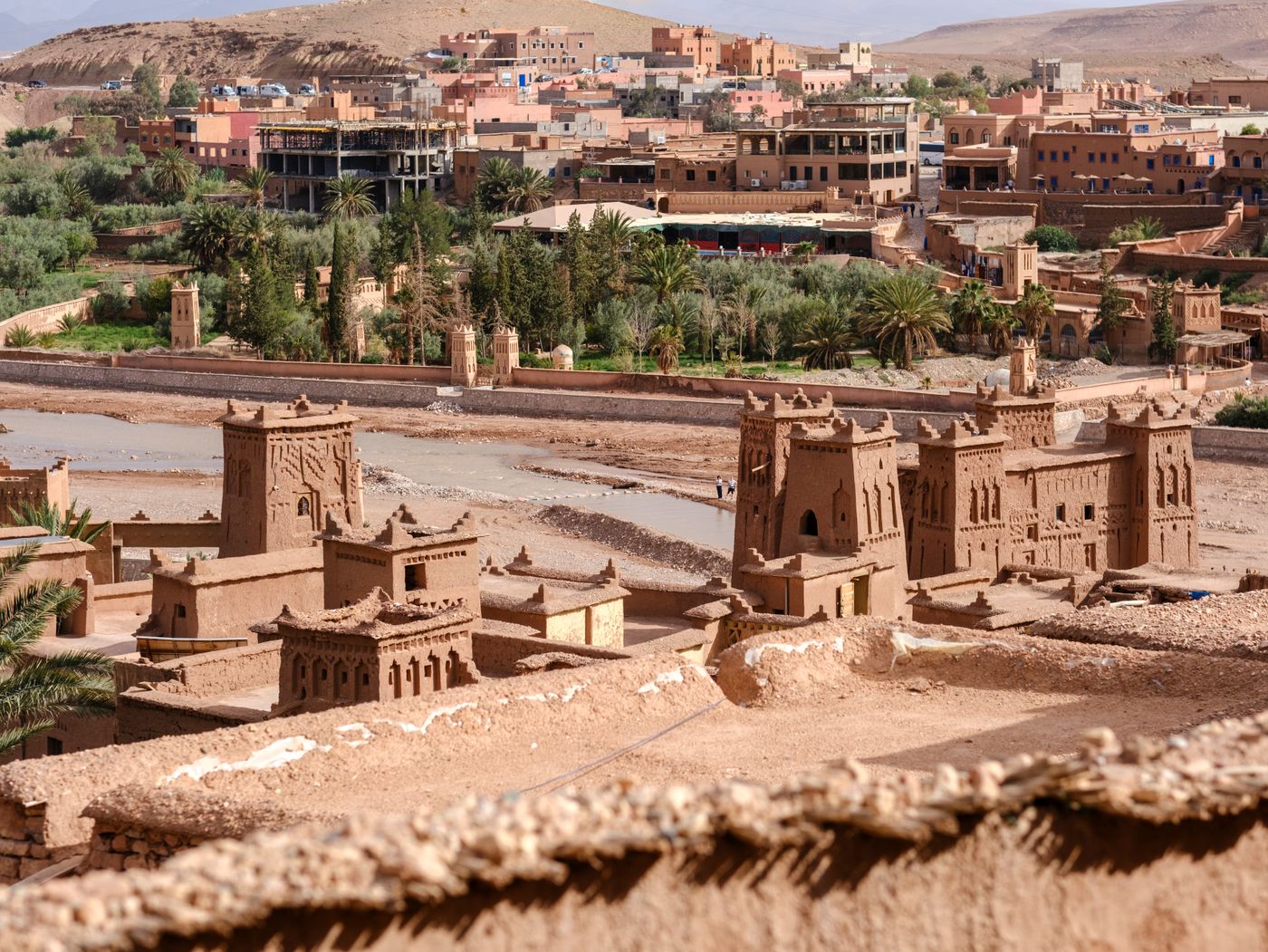
I would sleep near Aït Ben Haddou or around Ouarzazate rather than continuing east into the evening. Arriving at unfamiliar accommodation after dark in an area you do not know is rarely the better decision.
Day 2: Ouarzazate to Dades or Todra
The second day is where the route becomes especially rewarding because the landscape keeps changing without a single headline attraction dominating the schedule. Palm groves, kasbahs, dry plateaus and red-rock formations appear one after another as you continue east through the southern valleys toward the Dades and Todra regions.
I would choose either Dades Valley or Todra Gorge as the main focus rather than trying to do both in depth. Attempting to explore both valleys thoroughly and still reach a good overnight position further east usually leads to a rushed afternoon and late arrival.
If you sleep around Tinghir or Boumalne Dades, the following day's drive to Merzouga becomes more manageable. This is also where accommodation quality starts to vary more widely, so checking reviews before booking matters.
Day 3: from the valleys toward Merzouga and Erg Chebbi
This is the day the classic Sahara landscape finally begins to dominate. After Erfoud and Rissani, the dunes of Erg Chebbi start appearing on the horizon. The Moroccan National Tourist Office describes Merzouga as a gateway to the Sahara, highlighting dunes, desert walks and the wider Tafilalet oasis region.
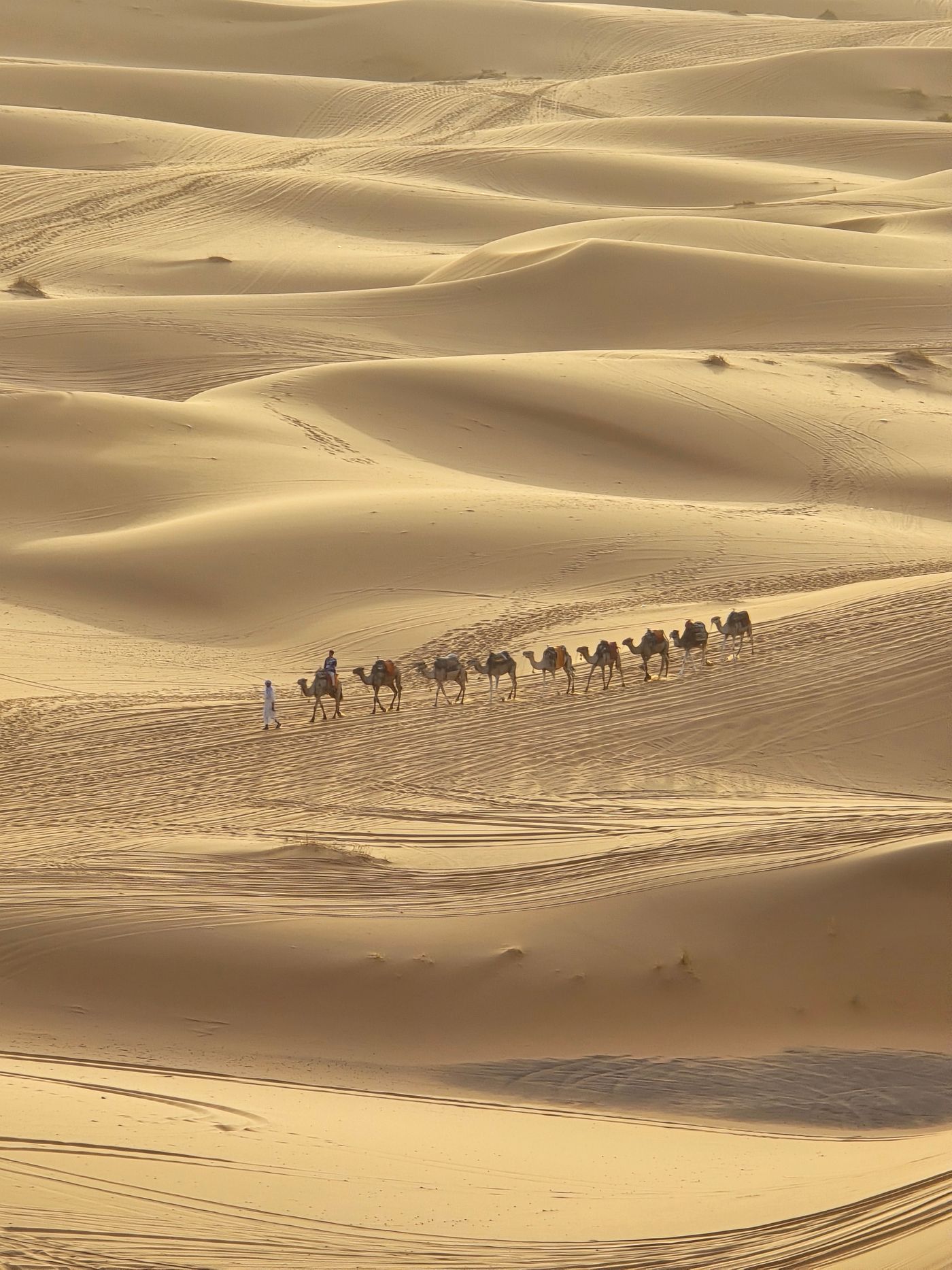
I would aim to arrive at Merzouga with enough daylight to settle in before sunset. Arriving at the dunes at the last possible minute turns what should be a relaxed evening into a logistical scramble.
Many accommodations around Merzouga offer transfers to desert camps, either for the night or just for sunset and dinner. Clarify what is included and when you need to be ready before the day arrives.
Day 4: a full day around Merzouga and Erg Chebbi
This is the day I would refuse to cut from the itinerary. A full desert day lets you experience how different the dunes feel in the cool morning, the harsh middle of the day and the softer light toward evening. It also removes the pressure to constantly pack and move.
The official tourism office lists camel rides, 4x4 excursions, sand activities and desert walks among the region's options. Some of these are worthwhile; others feel like box-ticking. I would prioritize the activities that give you time in the landscape rather than those that photograph well but pass quickly.
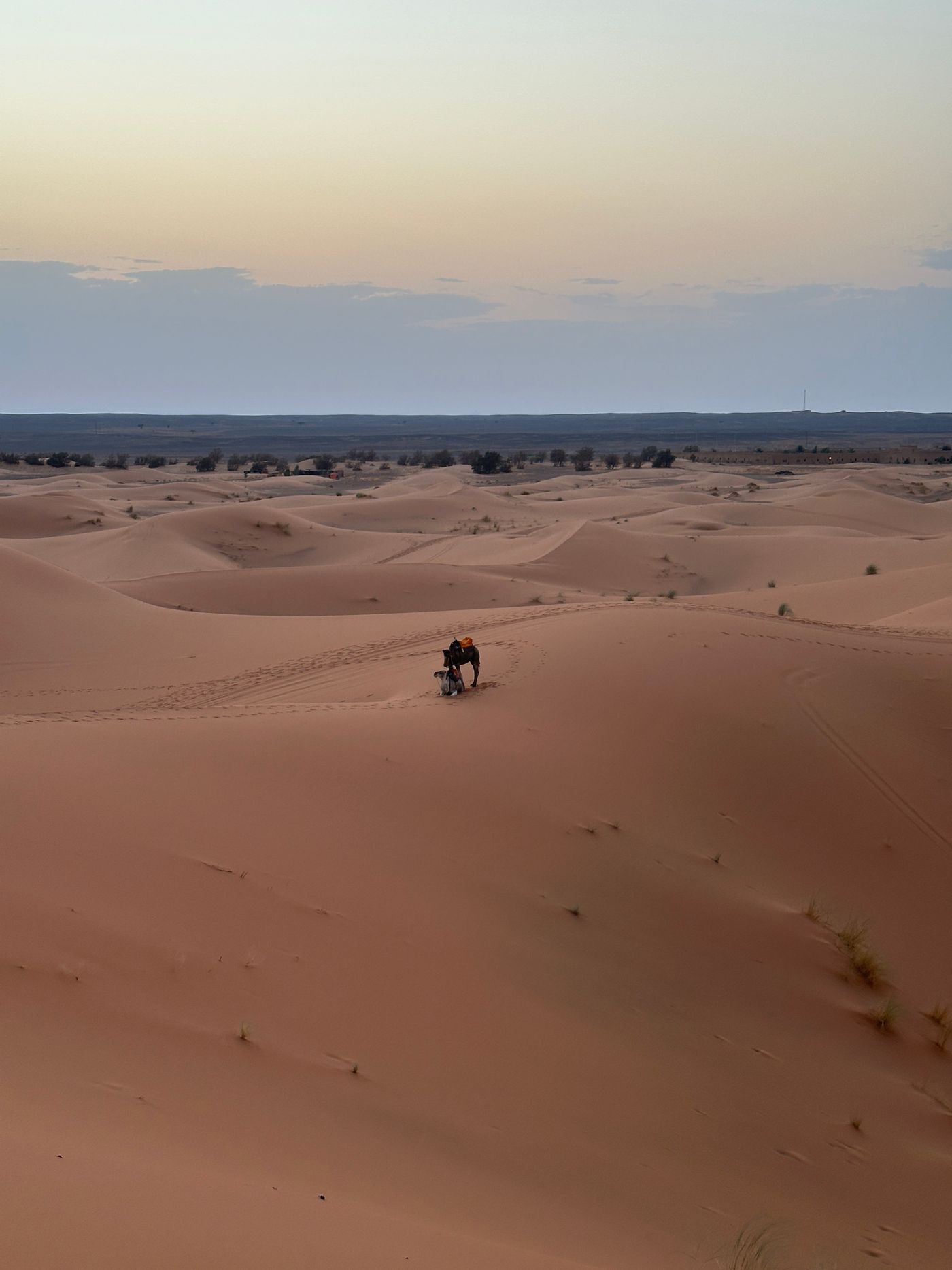
I would also leave a few hours completely unscheduled. Walking, sitting, watching how the light changes and simply being in the desert without an agenda are often the most memorable parts of the day.
Desert camps: what to know before booking
Camp quality varies enormously. Some are simple and quiet, with basic facilities and an emphasis on the landscape. Others are highly polished operations with permanent structures, private bathrooms, evening entertainment and multi-course meals.
I would choose based on what kind of experience you want, not just on how luxurious the tent looks in photographs. If you want silence and isolation, ask how many tents the camp has and whether multiple groups arrive every night. If comfort matters more than atmosphere, check bathroom facilities, heating or cooling options, and meal arrangements before committing.
Some camps are deep in the dunes and require a longer 4x4 transfer; others sit closer to Merzouga village. Neither is inherently better, but the location changes how much time you spend traveling versus how much you spend at the camp itself.
Day 5: continue to Fes or return west?
If your itinerary continues beyond Merzouga, heading north toward Fes is the cleaner route because you avoid retracing the entire southern road. The drive from Merzouga to Fes is long—the route passes through the Middle Atlas and covers substantial distance—but it keeps the trip moving forward rather than doubling back.
If you must return to Marrakech, I would strongly consider breaking the journey with an overnight stop rather than attempting the drive in one push. A final marathon road day is a poor way to end what should be a memorable desert experience.
Check our 10-day itinerary for how this desert route fits into a longer trip that continues to Fes.
Self-drive, private driver or organized tour?
These three approaches suit different travelers, and none is automatically superior. The right choice depends on your comfort with driving, your budget and how much control you want over the schedule.
Self-drive with a rental car
I would rent a car if I wanted complete control over stops, pace and detours. The main roads from Marrakech to Merzouga are generally paved, though conditions can vary and mountain sections require attention and confident driving. A rental car also means you can explore side routes, stop for photographs whenever you want and adjust the itinerary without negotiating with a driver or group.
The downsides are the driving itself—long days on mountain roads can be tiring—and navigation in areas where signage is less clear. You also need to arrange your own accommodation and be comfortable handling vehicle issues if they arise. See our driving guide for practical advice on road conditions and what to expect.
Private driver
Hiring a private driver removes the physical effort of driving while keeping schedule flexibility. You can still choose where to stop and how long to spend at each place, but someone else handles the navigation, traffic and mountain roads.
Drivers vary in experience, vehicle quality and willingness to accommodate requests, so clarify expectations before booking. Ask whether fuel is included, what happens if the itinerary changes and whether the driver arranges accommodation or just provides transport. Rates depend on route length, vehicle type and whether you book through an agency or directly.
Organized group tour
Group tours are the simplest to organize and can be cost-efficient per person depending on the operator and what is included. Transport, accommodation and many meals are included, and logistics are handled entirely by the operator. This works well if you prefer not to plan every detail or if you are traveling alone and want to split costs.
The trade-off is that the schedule belongs to the group. You stop where the itinerary says, leave when the group leaves and sleep where the tour sleeps. Some tours pack too much into too few days; others allow more breathing room. Check the number of nights, what is included and how much time is actually spent at each major stop before booking.
I would be especially cautious of two-night "Marrakech to Merzouga and back" tours. They technically reach the desert, but the time spent driving versus time spent at the dunes is heavily skewed toward the former.
My transport rule: choose the option that matches how you actually travel, not the one that sounds most adventurous or cheapest on paper. If you hate long drives, do not rent a car. If you need schedule flexibility, avoid rigid group tours.
When is the best time for the desert route?
Spring (March to May) and autumn (September to November) are generally the most comfortable seasons for the Marrakech to Merzouga route. Temperatures tend to be moderate in the mountains, valleys and desert, and conditions are typically pleasant for driving and outdoor activities.
Summer (June to August) brings intense heat, especially in the desert and lower valleys. Daytime temperatures can make midday exploration uncomfortable, though mornings and evenings remain more tolerable. If summer dates are fixed, plan activities for early and late in the day and verify that your accommodation has adequate cooling.
Winter (December to February) can be cold, especially at night in the desert and at higher altitudes in the Atlas. Snow is possible on mountain passes, and desert nights can drop significantly. If you travel in winter, pack warm layers and check current mountain road conditions before departure.
Check our seasonal guide for more detail on weather by region and month.
What to pack for the desert route
Bring layers that can adapt to significant temperature variation. Mountain mornings, valley middays and desert evenings can feel completely different within the same 24-hour period. A warm layer for evenings is essential even in warmer months, and winter travelers need proper cold-weather clothing.
I would keep water, snacks, a charged phone, offline maps and some cash in the vehicle at all times. Card acceptance can be limited in some smaller or remote establishments, so carrying some cash is sensible.
If your accommodation arranges a desert camp transfer, pack one small overnight bag that can be easily carried separately from your main luggage. Hauling a full suitcase into the dunes is awkward and unnecessary.
Common mistakes on the desert route
- Rushing to Merzouga in two nights: You technically reach the dunes, but most of the route becomes a blur of bus stops.
- Underestimating mountain driving time: The Atlas crossing takes longer than the map suggests. Build in extra time.
- Skipping the valleys: Dades and Todra are not filler between Marrakech and the desert; they are highlights.
- Arriving at Merzouga late: Reaching the dunes just before dark turns the evening into logistics instead of experience.
- Over-scheduling day four: The full desert day works best when you leave room to do less, not more.
- Attempting the return to Marrakech in one day: A marathon drive after several long road days is exhausting and ruins the end of the trip.
How the desert route fits into a longer Morocco trip
The Marrakech to Merzouga route works naturally as part of a 10-day or longer itinerary. For a 7-day trip, this route consumes most of the week, leaving little time for other regions. For 10 days, pair it with a few days in Marrakech at the start and continue to Fes afterward rather than backtracking. For 15 days, you can add the Atlantic coast, Chefchaouen or more time in the cities without feeling rushed.
See our 7-day, 10-day and 15-day itineraries for how this desert route integrates with the rest of Morocco.
Why this desert route works
The Marrakech to Merzouga route is memorable because it changes every day. Marrakech gives way to the High Atlas, then fortified kasbahs and palm groves, then drier plateaus and red-rock valleys, and finally the dunes. That progression is what makes a Morocco desert journey worthwhile.
The route works when you protect time for the road itself, give Merzouga at least one full day and avoid treating every stop as a box to tick before moving on. If I had one piece of advice, it would be this: do not think of Merzouga as the only destination. The journey from Marrakech is not the price you pay to reach the Sahara—it is one of the best parts of the trip.