The practical side of Morocco matters more than people expect
Planning Morocco well means spending almost as much time on logistics as on places. The country is easy to travel independently once you understand the basics, but a few decisions make a huge difference: whether to use trains or road transport, where to stay inside a medina, how much cash to carry, and how ambitious to make each travel day.
This Morocco travel tips hub is a useful place to start before booking the individual pieces. It is not a list of random advice. These are the practical questions that affect almost every route, whether you are spending a week around Marrakech or crossing the country from Tangier to the Sahara.
Getting around Morocco: do not use one transport method for everything
Morocco usually works best with a mixed transport strategy. Trains are excellent between major cities on the rail network. Road transport becomes essential for the Atlas, the southern valleys and Merzouga. In other words, the best answer to how to get around Morocco depends entirely on the part of the country you are crossing.
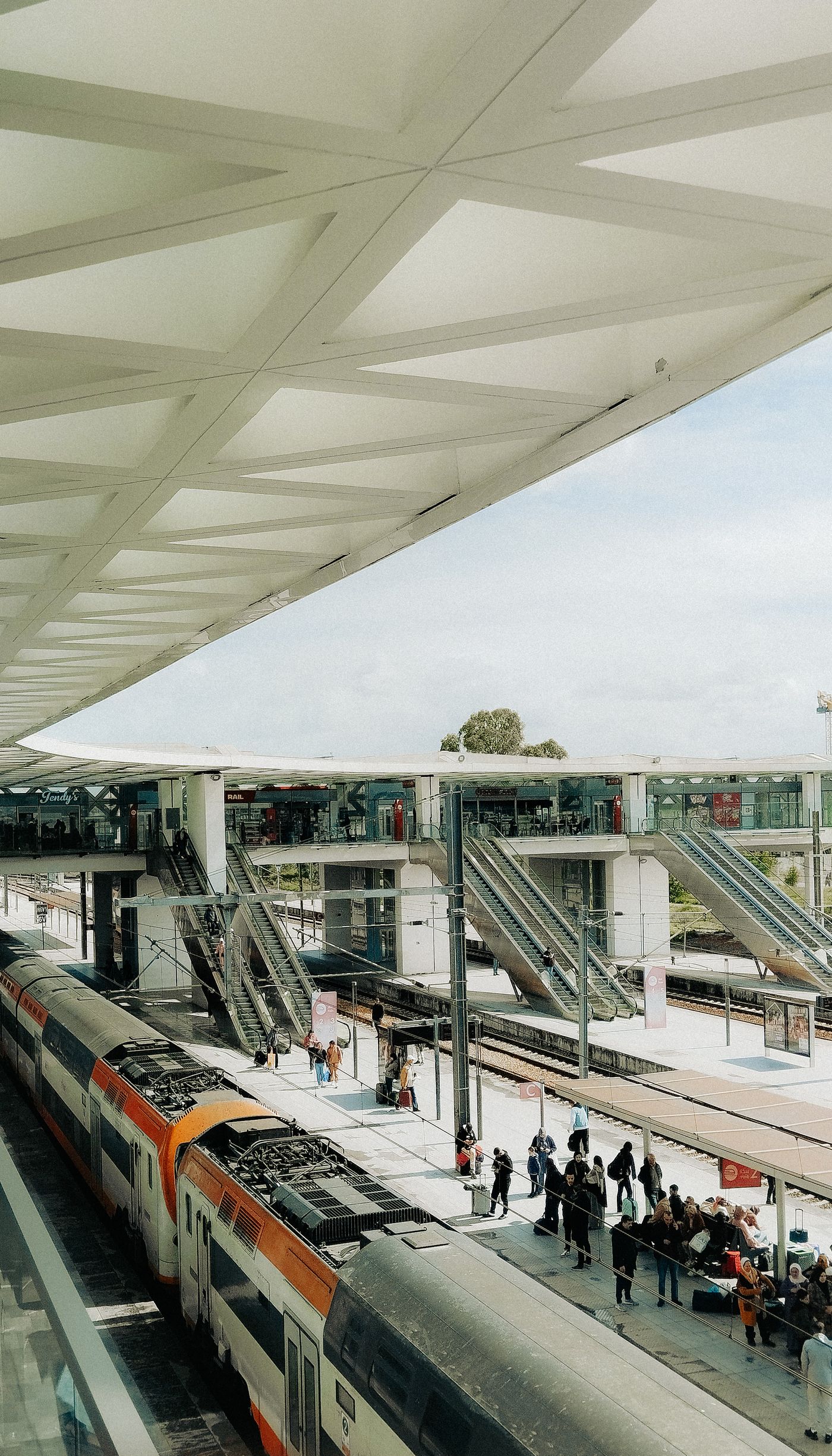
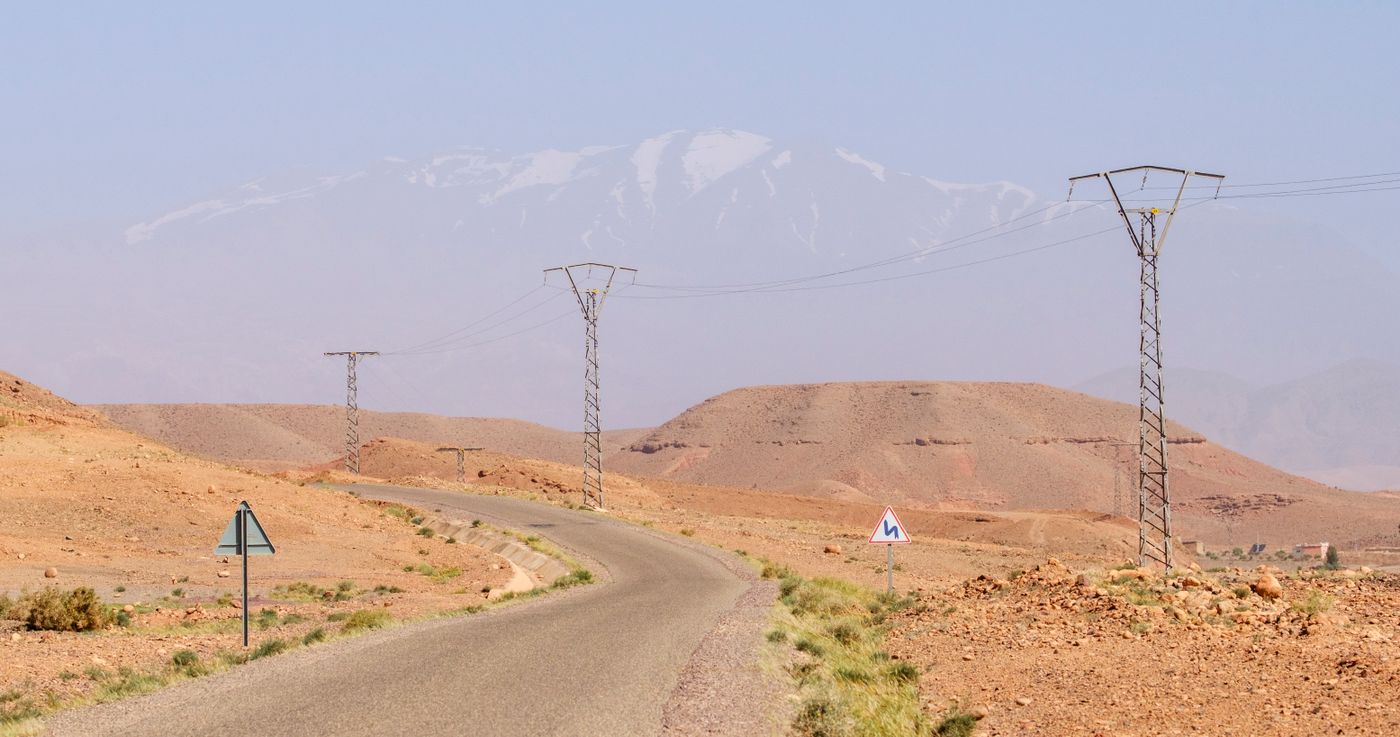
I would happily use the train between places such as Tangier, Rabat, Casablanca and Fes rather than drive just for the sake of having a car. Inside old medinas, a rental car becomes more burden than freedom. On the other hand, once a route runs through mountain passes, kasbah country and desert-edge towns, having a car or driver gives you much more control over stops.
When a rental car makes sense
I would rent one for a southern road trip, not for a city break. The roads themselves are generally manageable, but mountain driving takes longer than Google Maps makes it feel, and city traffic around Marrakech or Fes can be tiring. Avoid scheduling a long drive immediately after landing.
Where to stay: riad or hotel?
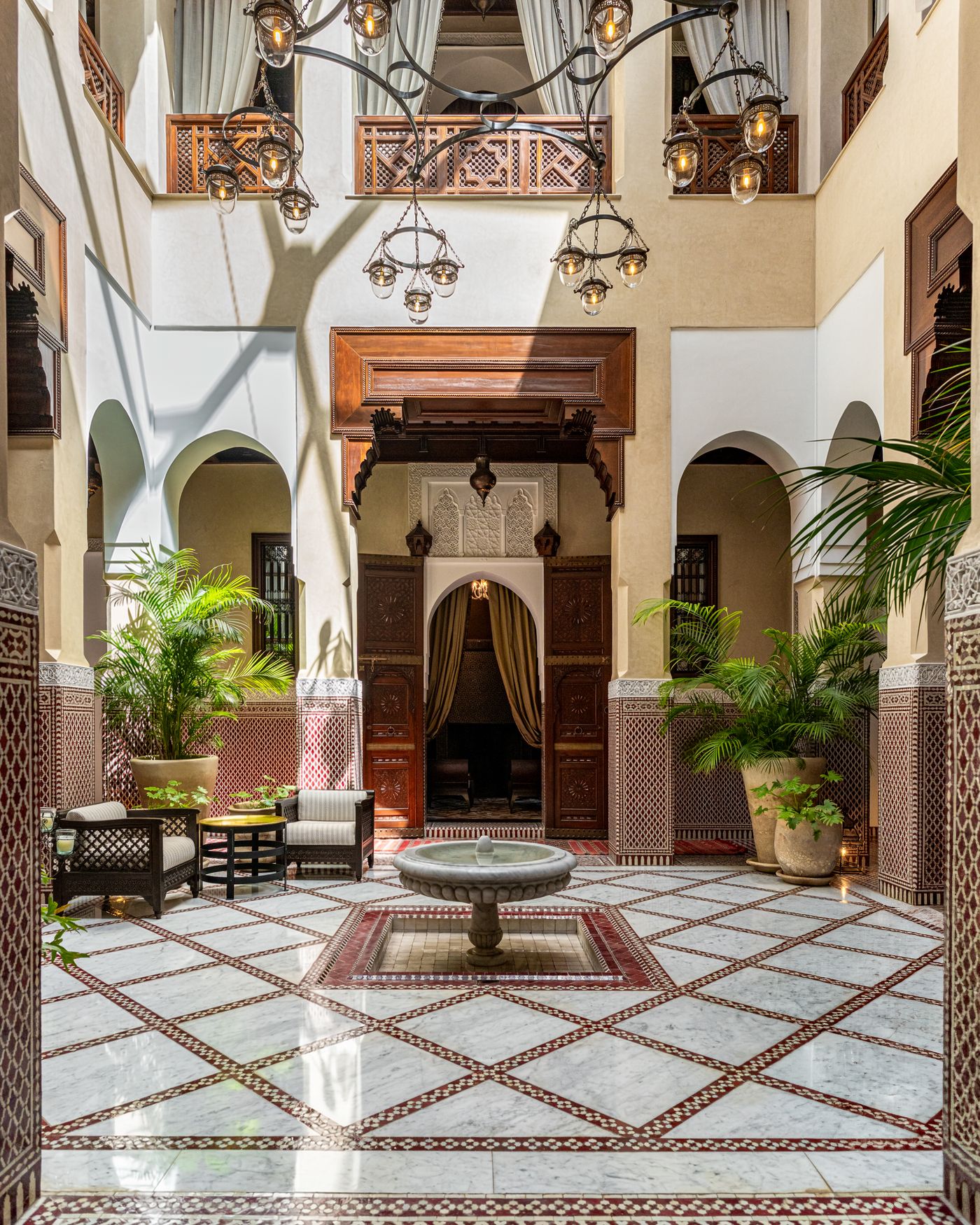
This is one of those choices where there is no universal winner. A riad can give you atmosphere, a courtyard and a much stronger sense of place, especially in Marrakech or Fes. But it may also mean walking through narrow lanes with luggage, finding an entrance that is not obvious from the street, and relying on someone to meet you the first time.
With a late arrival, a rental car or an early departure, easier road access often makes more sense. For a multi-night stay focused on walking the medina, staying inside or beside it can be the better trade-off.
Choose a riad when
You want atmosphere, walkability and a smaller property inside or close to the medina.
Choose a hotel when
You value easy vehicle access, lifts, larger rooms or predictable late-night arrival.
How to think about a Morocco travel budget
Morocco can be relatively affordable, but the range is huge. A simple local meal and a luxury riad dinner belong to completely different budgets. The same is true of transport: a public train ticket and a private driver across the south are not comparable expenses.
I would build the budget in layers rather than chase one “average daily cost.” Accommodation, long-distance transport and guided desert sections are the big fixed items. Food and local taxis are easier to adjust day by day.
Carry some cash as well. Cards are increasingly common in cities and larger properties, but I would not plan a rural road trip assuming every café, small guesthouse or local purchase will accept one.
Best time to visit Morocco: think by region, not country
Blanket answers to best time to visit Morocco are rarely useful. Marrakech, the High Atlas, Tangier and Merzouga do not behave like one climate zone. Spring and autumn are popular because they often balance city temperatures and road-trip conditions well, but even then you need layers for altitude and desert evenings.
Summer changes the equation completely in the interior and Sahara. If my trip were mainly Atlantic coast, I would think differently than if I were driving to Merzouga. Winter can be pleasant in cities, but mountain weather deserves proper attention.
What I would do: choose the route first, then check weather expectations for each region on that route. A desert and mountain trip should not be planned from a single “Morocco average temperature.”
Food: leave room for ordinary meals
Moroccan food is one of the easiest parts of the trip to over-plan. I would not book every dinner. Some of the best meals are the ordinary ones you find because you are hungry at the right moment: a tagine that has been cooking slowly, grilled meat, harira, bread, olives or a simple breakfast on a terrace.
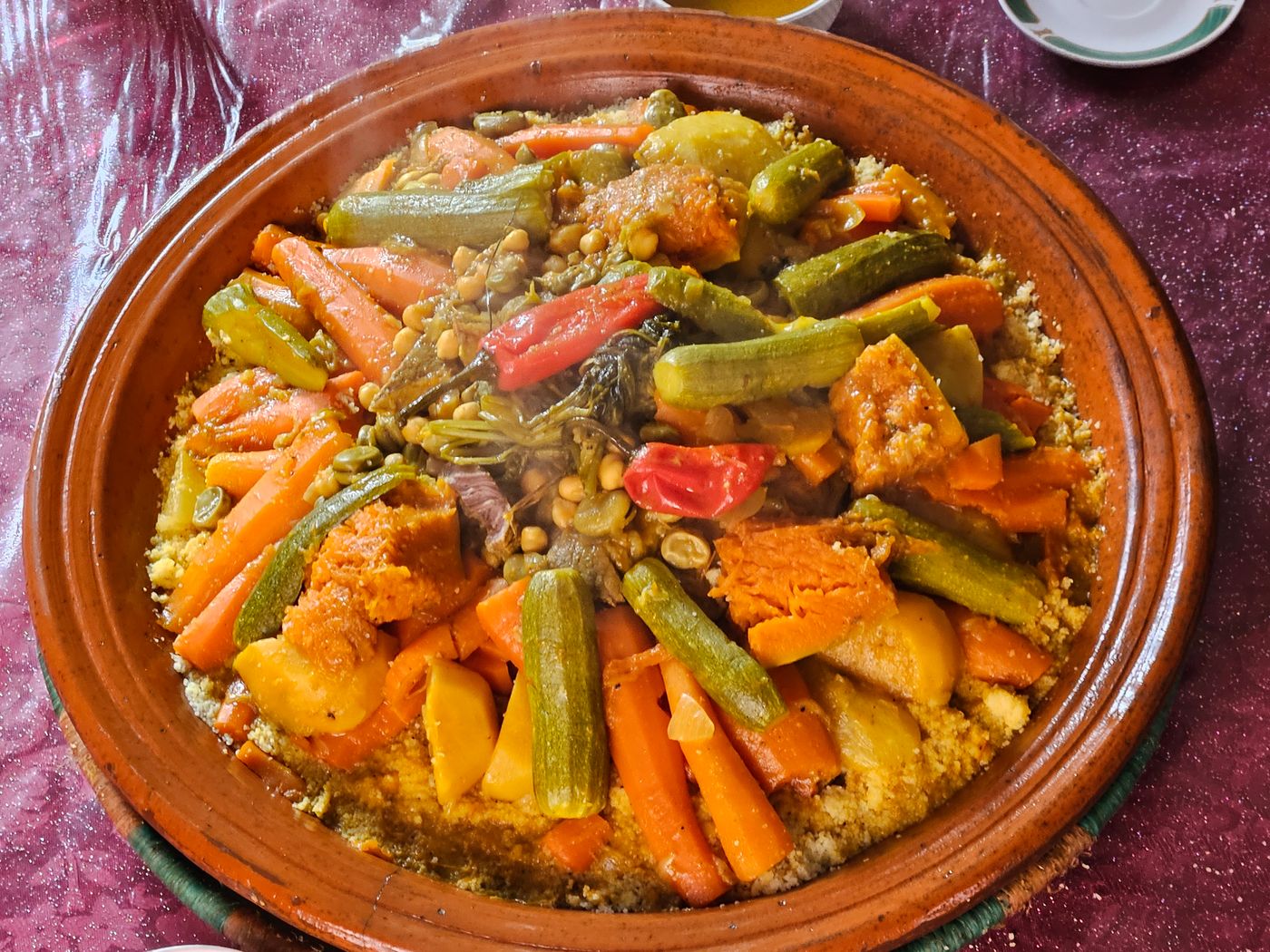
Tourist-heavy squares can be useful and fun, but the most visible restaurants around major attractions do not define Moroccan food. Look at how busy a place is at normal meal times, what it specialises in and whether the menu is trying to cover too many cuisines at once.
Medinas: expect to get a little lost
Trying to “solve” a medina before arrival by saving dozens of map pins can make the first hours more stressful. In Marrakech and especially Fes, assume a wrong turn will happen. Keep the accommodation name saved, carry enough phone battery and ask the property for the easiest landmark or gate to use.
The first arrival is when assistance is most useful. After walking the route from the riad to a main street or square a couple of times, navigation usually becomes much simpler.
What I would book in advance
There is no need to pre-book every hour, but the parts that can cause a real problem if they disappear are worth locking in. On a busy route, that means the first night after arrival, distinctive riads I specifically want, desert accommodation, and any transport segment where timing matters.
- Book the first night before you fly.
- Book desert camps and popular southern guesthouses earlier in busy seasons.
- Leave ordinary city meals and most walking days flexible.
- Do not build a route where one delayed transfer ruins the next three bookings.
A practical rule for travel days
Do not count a long road day as if it were a sightseeing day. If a transfer takes most of the daylight, that is the day. Anything extra is a bonus. This single rule makes Morocco itineraries much more realistic.
It is also why the site separates practical planning from destination guides. Knowing what to see in Marrakech is useful; knowing that the next leg crosses the Atlas and will take most of the day is what makes the whole trip work.
Use these guides before you lock the route
A useful planning rule is to make fewer assumptions, avoid unnecessary one-night stops and leave buffer around the parts of the trip that depend on roads. Independent travel becomes much easier when the route has enough room to adapt.