Merzouga vs Erg Chebbi: what the difference means
Merzouga is the village. Erg Chebbi is the dune field that sits next to it. When people talk about "visiting Merzouga," they usually mean experiencing the dunes of Erg Chebbi, not exploring the village itself. Understanding this distinction helps when booking accommodation and activities—you need to know whether you are staying in the village with vehicle access or at a camp deeper in the dunes.
The Moroccan National Tourist Office describes Merzouga as one of the gateways to the Sahara, highlighting Erg Chebbi's dunes, desert walks, sunrise and sunset experiences, and the wider Tafilalet oasis region. Official Merzouga guide.
How long to stay in Merzouga
The useful comparison is one night versus two nights, not whether Merzouga "deserves" a visit at all.
One night
One night can work if time is extremely limited or if the desert is not a priority. The typical pattern is arrive afternoon, transfer to camp or dunes for sunset, sleep, watch sunrise and leave. You see the dunes, but most of the time goes to logistics rather than experiencing the landscape.
If one night is all you have, I would manage expectations accordingly. It is a Sahara introduction, not a deep desert experience.
Two nights
Two nights is what I would choose if Merzouga matters to the trip. It gives you one full day without packing, transferring or leaving early. That middle day is when the desert stops feeling like a scheduled photo opportunity and starts feeling like a place you can actually inhabit for a while.
Two nights also removes the pressure to fill every hour with organized activities. You can walk, sit, watch light change, and leave gaps in the schedule.
Village accommodation vs desert camp
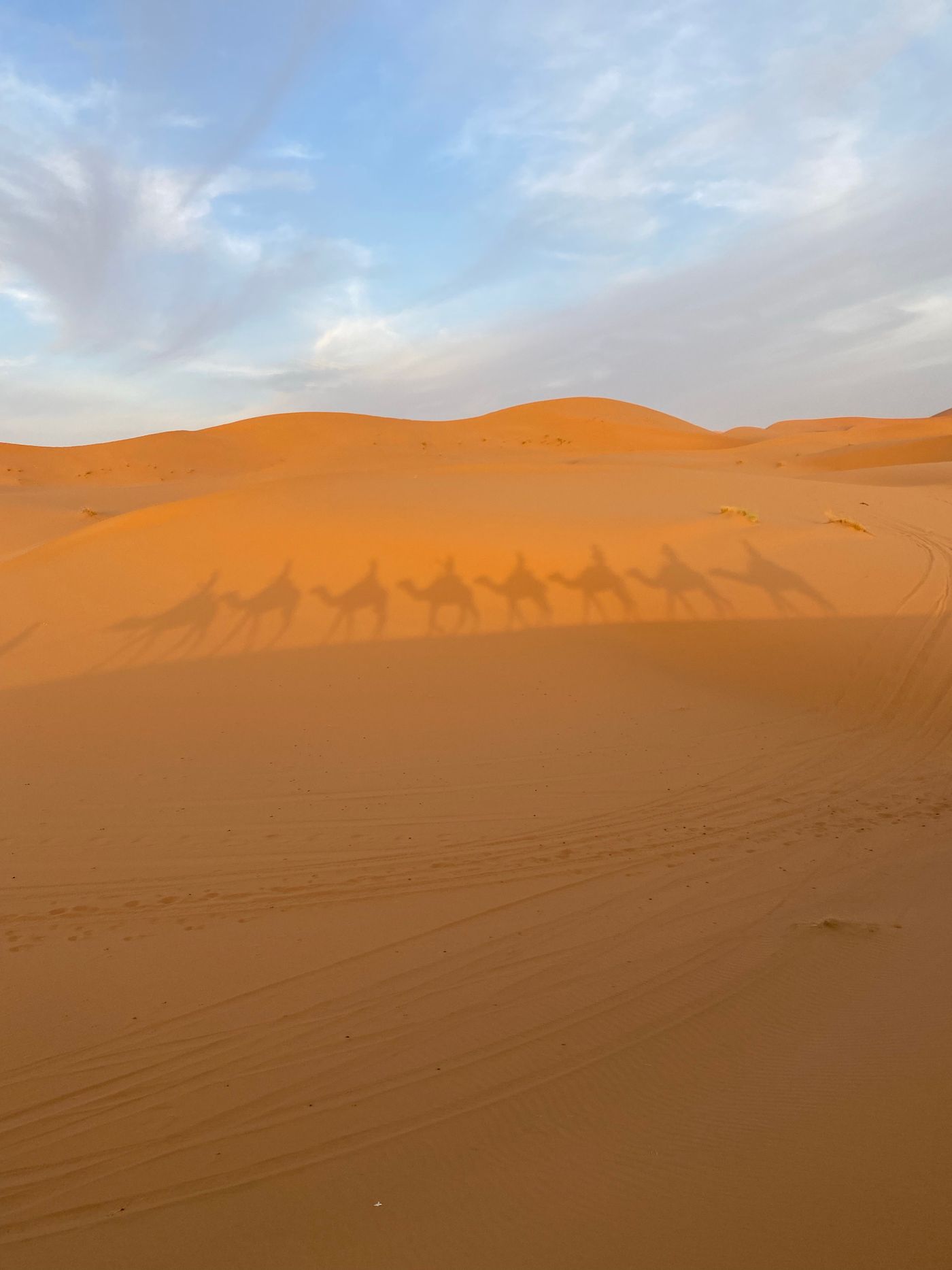
You can stay in a guesthouse or hotel in Merzouga village, sleep in a camp among the dunes, or combine both. Each approach suits different priorities.
Village guesthouses and hotels
Staying in the village gives you vehicle access, secure storage for main luggage, hot showers, charging, and the option to visit the dunes without sleeping there. You can arrange sunset or sunrise trips to the dunes and return to a conventional room.
This works well if you want convenience, are traveling with a car, or prefer not to sleep in a tent. See our accommodation guide for more on choosing where to stay.
Desert camps
Camps sit in or near the dunes, accessed by 4x4 transfer. They range from simple setups with shared facilities to upscale operations with private bathrooms, electricity and substantial meals. Sleeping in the dunes is part of the experience for many travelers, but camps vary enormously in comfort, isolation, service and atmosphere.
Combining both
I would consider one night in the village and one in a camp. That combination gives you a practical base for luggage and vehicle, plus the experience of sleeping near the dunes. It also makes arrival and departure less rushed.
What to check before booking a desert camp
Not all camps are equal, and "luxury" is used inconsistently. Before booking, I would want to know:
- How many tents: A camp with six tents feels very different from one with forty.
- Bathrooms: Private or shared? Hot water available? Facilities inside or outside the tent?
- Meals: What is included? Dinner and breakfast are common, but verify.
- Transfer: How do you get to the camp? How long does it take? What happens with main luggage?
- Location: How far into the dunes? Some camps sit close to vehicle access; others are more isolated.
- Bedding and climate: Is bedding adequate for the season? Nights can be cold, especially in winter.
- Activities: What is included vs what costs extra? Camel rides, sandboarding, music?
- Atmosphere: Social with group dinners and entertainment, or quieter and more isolated?
I would read recent reviews specifically about noise, bathroom quality, food and whether the camp matched expectations. Photos can be misleading.
Activities around Erg Chebbi
The official tourism office lists sunrise, sunset, walking, camel rides, sandboarding and 4x4 excursions among activities associated with the Merzouga region. None of these is universally essential—what works depends on your interests and how much time you have.
Walking the dunes
Walking is free, flexible and lets you explore at your own pace. Early morning and late afternoon are the most comfortable times, especially in warmer months. I would prioritize this over filling the day with organized activities.
Camel rides
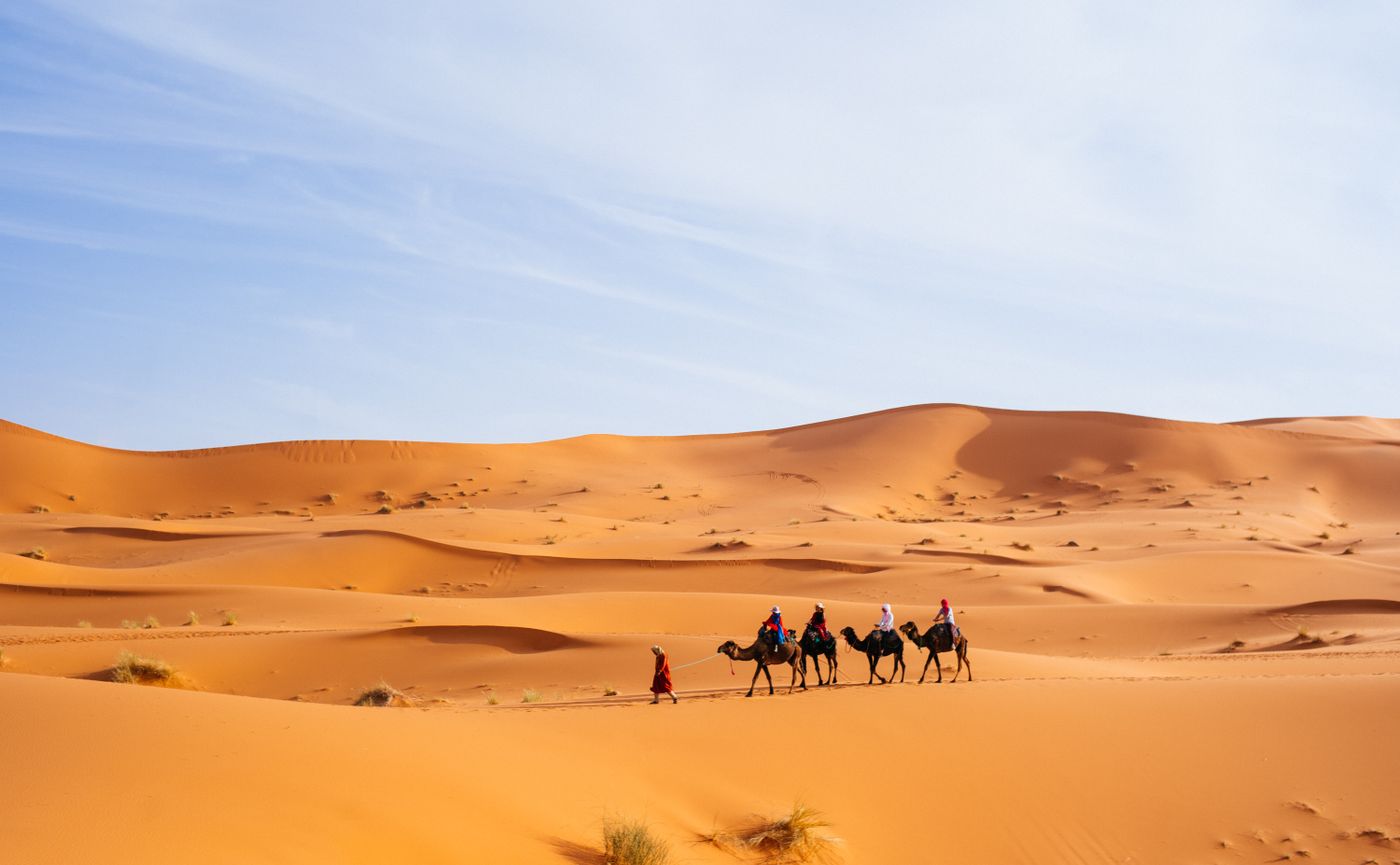
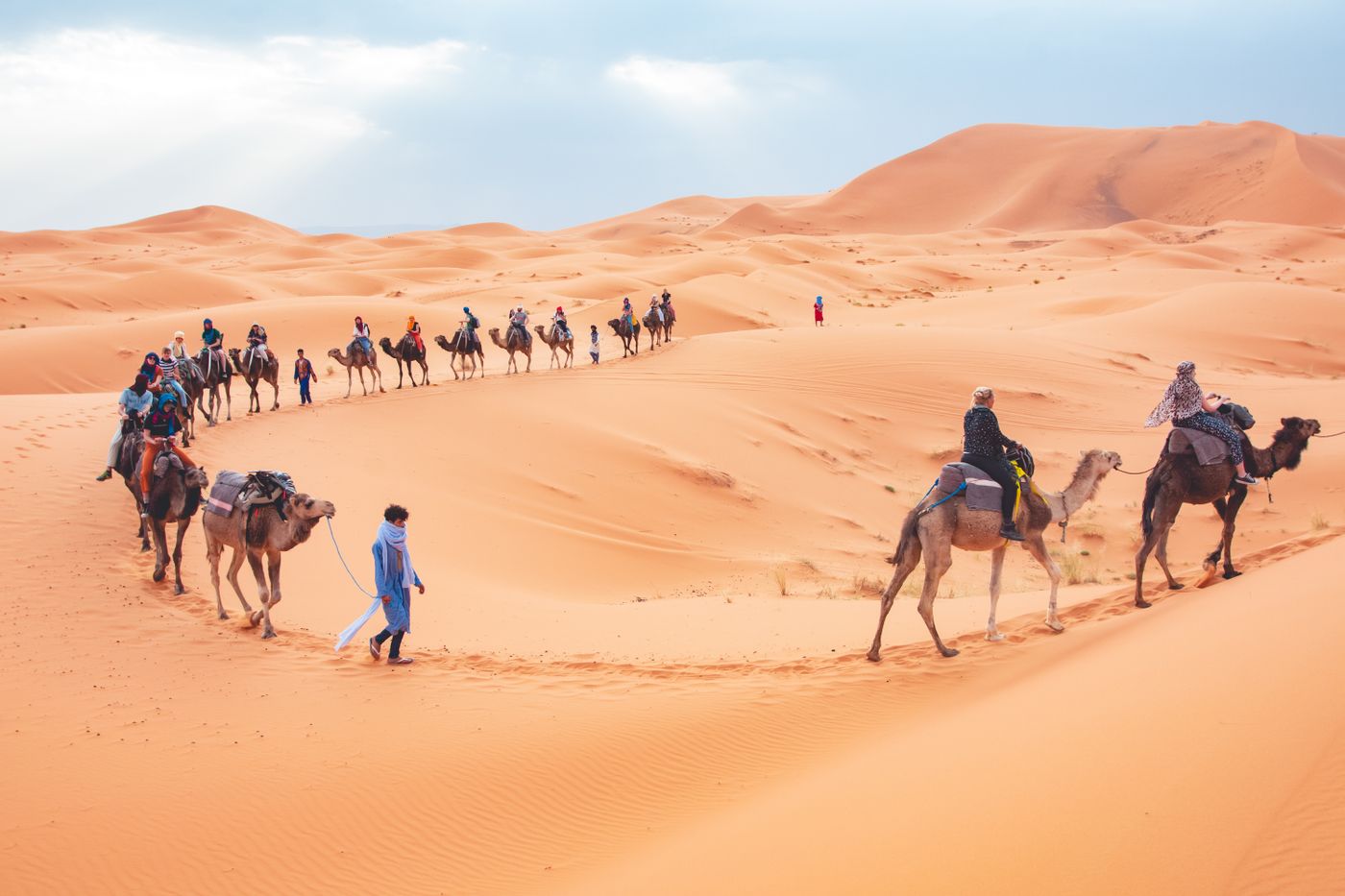
Camel rides are heavily marketed around Merzouga and can be part of the experience, but the desert does not require one. If you do want to ride, clarify duration, whether it is included in your camp package or costs extra, and what the ride actually involves—some are short sunset trips, others longer excursions.
4x4 excursions
4x4 trips can take you to parts of the dunes, oases or villages around Merzouga that are harder to reach on foot. Some travelers enjoy these; others find them noisy and prefer the quieter desert. Check what is included with your accommodation and whether additional excursions interest you before committing.
Sandboarding
Sandboarding works on steeper dunes. It is fun for some travelers, irrelevant to others. I would not book a camp purely because it offers sandboarding unless that activity genuinely interests you.
Sunrise and sunset
Sunrise and sunset are the most photographed times in Erg Chebbi, and the light is genuinely striking. I would not turn either into a rigid schedule, though. Walking to a good vantage point early, watching the light change and then having a slow breakfast works better than a group departure timed to the minute.
Activity rule: I would rather do one or two activities well and leave time unscheduled than book four organized experiences and spend the whole day being transferred between them.
Dayet Srij and the wider Merzouga area
The official tourism office mentions Dayet Srij, a seasonal lake near Merzouga associated with migratory birds when water is present. The wider area includes palm groves, small villages and fossil sites. These are options if you have extra time, but the dunes themselves are the main reason most people come.
Getting to Merzouga
Merzouga sits in southeastern Morocco, accessible primarily by road. The journey from Marrakech or Fes is long, which is why this destination works best as part of a multi-day southern route rather than a quick out-and-back trip.
By car (self-drive)
If you rent a car, the drive from Marrakech typically takes two to three days with overnight stops at Aït Ben Haddou or Ouarzazate, then Dades or Todra, before reaching Merzouga. Main access routes are generally paved, though mountain sections require attention and road conditions can vary. See our driving guide for road conditions.
Parking is available at many village properties, but confirm arrangements with your accommodation. If your camp arranges transfers, clarify where to leave the vehicle.
By private driver
Hiring a driver removes the effort of long road days while keeping schedule flexibility. Rates vary depending on route, duration and vehicle type. This option works well for groups or travelers who prefer not to drive mountain and desert roads themselves.
By organized tour
Multi-day tours from Marrakech or Fes to Merzouga handle all transport, accommodation and many meals. This is the simplest option logistically but the least flexible. Check how many nights are actually spent in Merzouga—some "desert tours" include only one rushed overnight.
By bus or shared transport
Public transport can be possible depending on the route and current operator schedules, but it is less flexible than traveling by car, driver or organized tour. For most travelers, private vehicles or tours are more practical. Check current schedules directly with operators if considering this option.
See our desert route guide for how Merzouga fits into a longer Marrakech-to-Fes trip.
Best time to visit Merzouga
Season affects comfort significantly. Erg Chebbi is visually striking year-round, but temperature changes how much time you want to spend outside.
Spring (March to May)
Spring offers moderate temperatures and is generally comfortable for desert activities. Days are warm, nights can still be cool. This is a popular travel period, so book accommodation earlier.
Summer (June to August)
Summer brings intense heat, especially midday. If summer dates are fixed, plan activities for early morning and late afternoon, and verify that accommodation has adequate cooling. The desert is not impossible in summer, but it requires adjusting schedules around temperature.
Autumn (September to November)
Autumn is another comfortable period with moderate temperatures and generally good conditions for outdoor activities. Like spring, it attracts more travelers.
Winter (December to February)
Winter days can be pleasant, but nights are cold. Desert camps need adequate bedding and heating where available. If you travel in winter, pack warm layers for evenings and early mornings. Check our seasonal guide for more detail.
How Merzouga fits into a Morocco itinerary
Merzouga works best as part of a southern road trip, not as an isolated detour. The classic route is Marrakech → High Atlas → Aït Ben Haddou → Dades or Todra → Merzouga, then either returning west or continuing north toward Fes.
For a 7-day trip, this route consumes most of the week. For 10 days, it fits naturally with time in Marrakech and Fes. For 15 days, you can add the Atlantic coast or northern Morocco without feeling rushed. See our 7-day, 10-day and 15-day itineraries for how Merzouga integrates with the rest of Morocco.
Common Merzouga mistakes
- Arriving too late: Reaching the dunes just before sunset turns the evening into a logistical scramble.
- Booking only one rushed night: You see the dunes but spend most of the time packing, transferring or leaving.
- Choosing a camp purely on photos: Wide-angle shots make tents and facilities look much larger and more private than they are.
- Not checking what is included: Meals, transfers, activities—verify everything before assuming it is part of the package.
- Taking all luggage into the dunes: If staying at a camp, pack a small overnight bag and leave main luggage in the village or vehicle.
- Over-scheduling activities: Filling every hour removes the quiet time that makes the desert memorable.
- Planning a long drive immediately after a late camp night: The road out is long—allow a reasonable departure time.
What to pack for Merzouga
- Layers: Evenings and early mornings can be much cooler than midday, especially in spring, autumn and winter.
- Sun protection: Hat, sunglasses, sunscreen. Shade is limited.
- Water: Stay hydrated, especially in warmer months.
- Footwear: Something that can handle sand without becoming a project. Sandals work for some; closed shoes for others.
- Small overnight bag: If sleeping at a camp, pack light and leave main luggage secured elsewhere.
- Battery capacity: For phone, camera and navigation. Charging may be limited at some camps.
- Cash: Smaller guesthouses and some activities may not accept cards.
Do you need a 4x4 to reach Merzouga?
A 4x4 is generally not necessary simply to reach Merzouga via the main road network, though road conditions should be checked before travel. A 4x4 becomes relevant for specific off-road excursions rather than standard access to the village. I would not rent one just because "desert" appears in the itinerary.
What Merzouga is and is not
Merzouga is not the entire Sahara, and Erg Chebbi is not the only desert in Morocco. It is one accessible, visually dramatic dune field that has become a standard stop for travelers seeking a Sahara experience. That does not make it less worthwhile—it just means managing expectations.
You are not "completing" the Sahara by visiting Merzouga. You are experiencing one beautiful part of a much larger desert region. The value comes from giving it proper time rather than treating it as a box to tick between two long drives.
The version I would choose
I would arrive at Merzouga before sunset on day one, stay two nights (one in the village, one in a camp, or two nights in one location depending on preference), keep the middle day deliberately light with unscheduled hours, and leave only after breakfast on the final morning. That does not maximize the number of activities or destinations. It maximizes the experience of being in the dunes, which is the reason to come in the first place.