
What I would actually do with 7 days in Morocco
If I only had one week, I would not try to cross Morocco from Marrakech to Merzouga and then continue to Fes. It can be done, but the trip starts to feel like a transport challenge rather than a holiday. For a first 7 day Morocco itinerary, I would choose a tighter route: Marrakech, one day in the High Atlas and two nights in Essaouira.
That gives you three completely different versions of Morocco without wasting half the week on long road days. Marrakech gives you the medina, palaces and markets; the Atlas breaks up the urban part of the trip; Essaouira slows everything down at the end.
Days 1–3: Marrakech without rushing it
Three nights in Marrakech sounds generous until you actually arrive. The medina is tiring if you attack it like a checklist. I would use the first day around Jemaa el-Fnaa, Koutoubia and the souks, but I would leave gaps between sights instead of trying to see every palace before lunch.
On the second day, I would work through the southern medina: Bahia Palace, El Badi and the Saadian Tombs. They sit close enough together to make sense on foot. On the third day, Majorelle and Guéliz are an option, but I would only go if they genuinely interest you. Otherwise, another slow morning in the medina often feels more rewarding.
The reason to keep Marrakech to three days is simple: in a seven-day trip, one extra city means one less proper day somewhere else. That trade-off is rarely worth it.
Day 4: a day in the High Atlas
On day four I would leave Marrakech early for the mountains. Ourika works well for an easy day trip. Imlil is better if walking is the priority. I would choose one valley, not try to combine several. The roads are slower than they look on a map, and half the point of this day is getting away from the pace of Marrakech.
If you are driving yourself, take mountain roads seriously. Distances are not huge, but bends, villages and local traffic slow you down. I would rather spend an extra hour over lunch in one valley than arrive back in Marrakech tired after chasing three viewpoints.
Days 5–6: Essaouira
Essaouira is the reason this route works so well. The Moroccan National Tourist Office describes it as a walled Atlantic city with white-and-blue facades, a fishing port and strong wind sports culture, and that is exactly the contrast you feel after Marrakech.
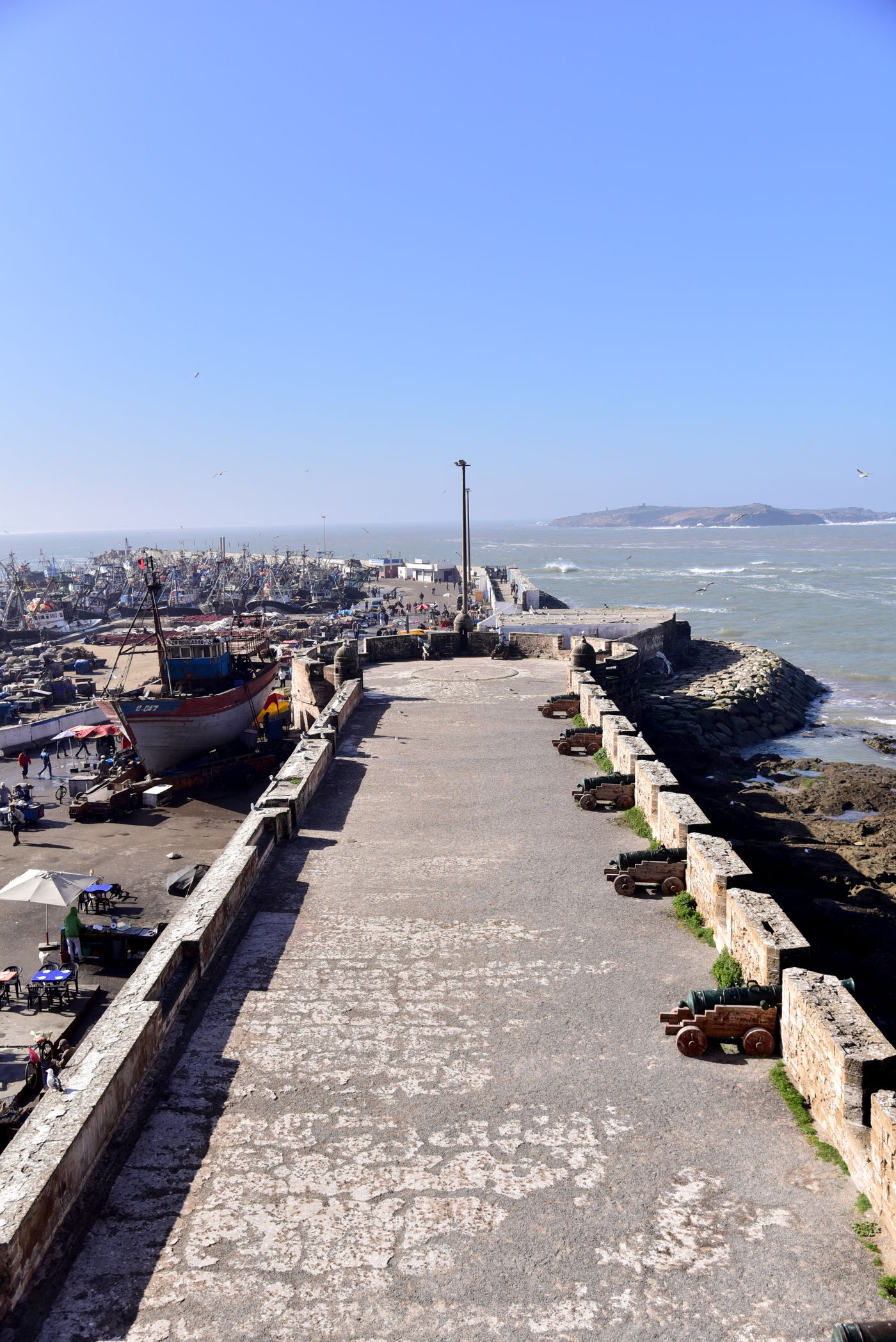
I would arrive by early afternoon, walk the medina and ramparts, then spend the evening around the port or in the old town. The next day should stay deliberately light. Walk the beach, eat seafood, return to the medina and leave time for nothing in particular.
That slower second day matters. One-week itineraries often fail because every day is treated as a chance to add another excursion. In Essaouira, the better choice is usually to stop adding things.
Day 7: return to Marrakech
If your flight leaves the following morning, come back to Marrakech on day seven and sleep there. I would not gamble on a same-day road transfer from Essaouira for an important international flight unless the timing leaves a very comfortable margin.
If your flight is late in the evening, you can keep part of the morning in Essaouira and return later. Either way, leave buffer. Road travel in Morocco is usually straightforward, but delays happen, and the last day is the worst time to discover you built the itinerary too tightly.
Is this the best 7 day Morocco itinerary?
There is no single best route, but this version suits travellers who want variety without exhaustion. The aim is a trip that feels substantial rather than a race across the map.
My rule for one week: if adding a destination creates two extra long travel days, I remove it.
What if the Sahara is your priority?
Then I would change the entire route. Do Marrakech briefly and commit to the southern desert route via Aït Ben Haddou, Dades or Todra and Merzouga. I would not try to keep Essaouira as well. The Sahara deserves a route of its own because Merzouga sits deep in the southeast, and the official tourism office places it in a region defined by the Middle Atlas, eastern valleys and Erg Chebbi dunes.
What I would leave out
- Chefchaouen: beautiful, but it belongs with Fes and Tangier.
- Fes: possible with an open-jaw flight, but not on this particular Marrakech–Atlas–Essaouira loop.
- Merzouga: only include it if the desert is the main purpose of the trip.
- Casablanca as a sightseeing detour: only add it if flights or your own interests justify it.
Transport for this route
Marrakech needs no car for this route. The medina is walkable, and taxis or transfers can cover the journeys that are awkward on foot.
For the High Atlas, a day tour, private driver or other road transfer can work for Ourika or Imlil. Public transport is less straightforward for mountain valleys, so check current options and choose the arrangement that fits the route and level of flexibility you want.
Marrakech to Essaouira is straightforward by intercity coach, shared road transport or rental car. I would check the current CTM and Supratours schedules directly before travelling rather than rely on fixed prices or departure times, because both can change. A rental car is most useful if you also want to explore stops outside Essaouira itself.
I would only rent a car if I wanted to stop at Sidi Kaouki or explore coastal routes outside Essaouira proper. Otherwise, the bus is simpler and cheaper.
Practical details for this 7-day route
Accommodation strategy
Book early if a specific Marrakech riad matters to you, especially around busy travel periods. Essaouira availability also varies with season and events. The Atlas day needs no overnight on this version of the route.
In Marrakech, staying inside the medina puts you closer to sights but farther from taxis and newer restaurants. Guéliz or Hivernage work if you prefer a quieter base with easier car access. In Essaouira, I would stay inside the medina walls unless you specifically want a beach resort outside town.
What changes the cost most
Accommodation choice in Marrakech and Essaouira, the type of Atlas transport, and whether you use a coach or rental car between cities have the biggest effect on this route's total cost.
Instead of relying on fixed daily figures, compare the main categories in the Morocco travel costs guide and check current transport or accommodation prices close to booking.
Best time to visit
Spring and autumn often suit this route well because conditions can be easier for city walking, mountain travel and the coast. Weather still varies by region, so check the forecast for Marrakech, the Atlas and Essaouira separately before departure.
Summer can make midday sightseeing in Marrakech uncomfortable, while the Atlantic coast is often more moderate. Winter can bring colder mountain conditions and occasional rain. Pack for the route rather than one national forecast, and check current mountain conditions before leaving Marrakech.
The pace I would aim for
Three nights in Marrakech, one mountain day and two nights on the Atlantic gives the week a useful rhythm: busy, quiet, busy, quiet. It is more sustainable than seven hotel changes in seven nights.
If this were my first trip and I knew I would return to Morocco, I would choose this route without worrying about the places I missed. Morocco works better in pieces. The north, the Sahara and the Atlantic each deserve enough time to feel different rather than becoming names on a list.
Need more planning help? Use the practical planning guides, the detailed Marrakech and Essaouira guides, and the Morocco travel costs guide for budgeting by category.