Should you go to Marrakech?
If this is your first Morocco trip, probably yes. Marrakech isn't perfect—it's chaotic, sometimes exhausting, and parts of the medina feel designed to separate tourists from their money—but it's also one of the easiest places to start because the infrastructure works, the sights are concentrated, and onward routes to the desert, coast, or Atlas make logistical sense.
The mistake people make is treating Marrakech like a museum checklist. You don't "do" Marrakech by ticking off ten famous spots. You experience it by spending concentrated time in two or three neighborhoods, allowing the rhythm of the medina to unfold at its own pace, and accepting that some of the most memorable moments happen between the official attractions.
What's worth your time in Marrakech?
Many itineraries treat Marrakech like an achievement list: Koutoubia, souks, Bahia, Majorelle, hammam. That pace can leave the city feeling exhausting rather than memorable. Here is a more selective way to plan it.
Jemaa el-Fnaa and the northern souks
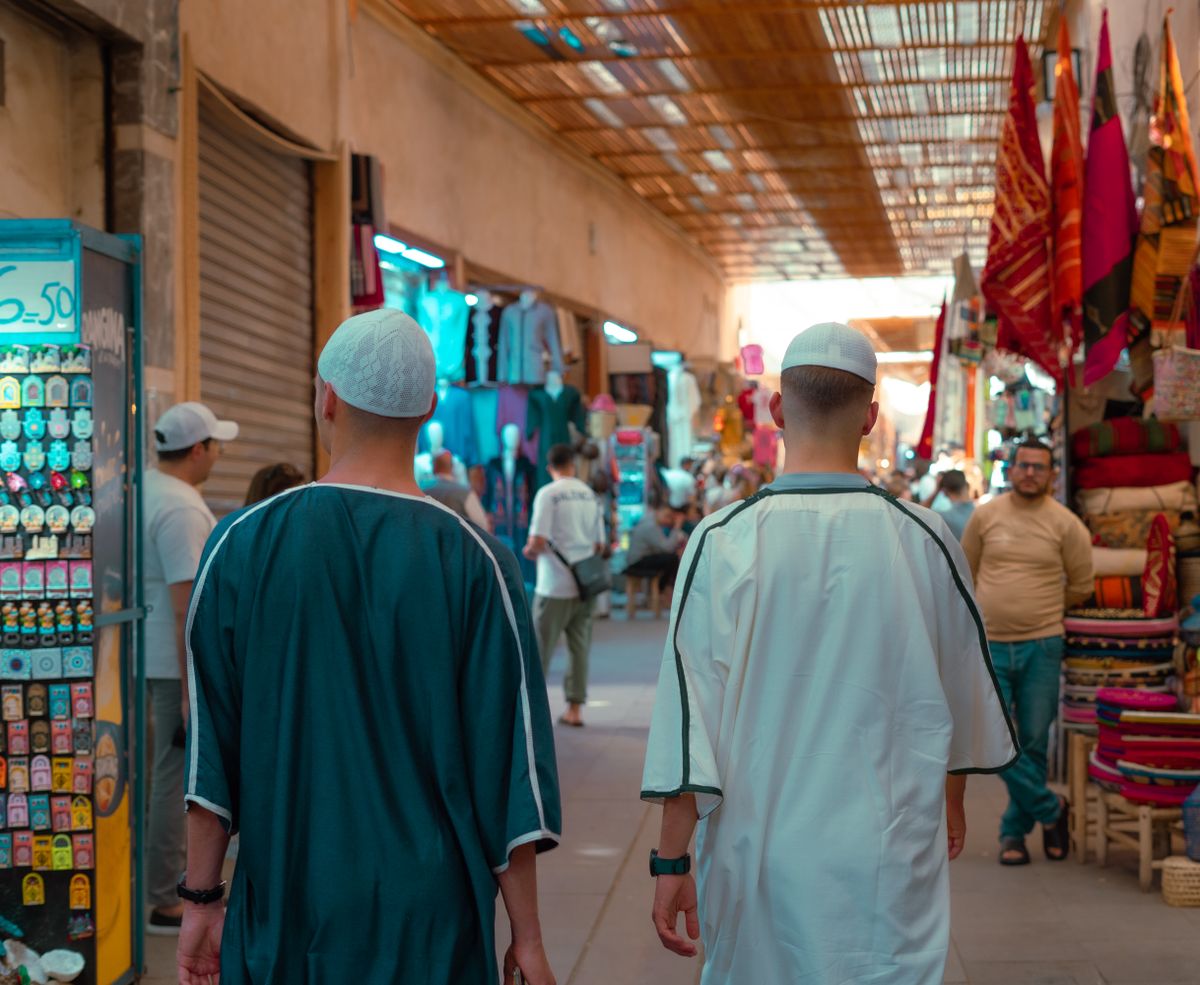
This is ground zero. Go once during the day to get your bearings—it'll feel overwhelming, that's normal—then return toward sunset when the food stalls multiply and the energy shifts. The square itself isn't beautiful, but it's useful as an anchor point, and watching it transform from marketplace to open-air theater is more interesting than any single snapshot.
From the northern edge of Jemaa el-Fnaa, you can walk straight into the souks. Use the main lanes as anchors, but leave room to wander. Metalworkers, spice vendors and carpet shops blend into one another, and part of the experience is seeing how the working souks connect.
Koutoubia Mosque
You'll see the minaret from half the city. It's a landmark, and the gardens around it are a decent breather if the medina gets too intense. Non-Muslims can't go inside, but it photographs well at dusk, and it's useful as a waypoint when you're orienting yourself between the medina and newer districts.
Bahia Palace and the southern medina
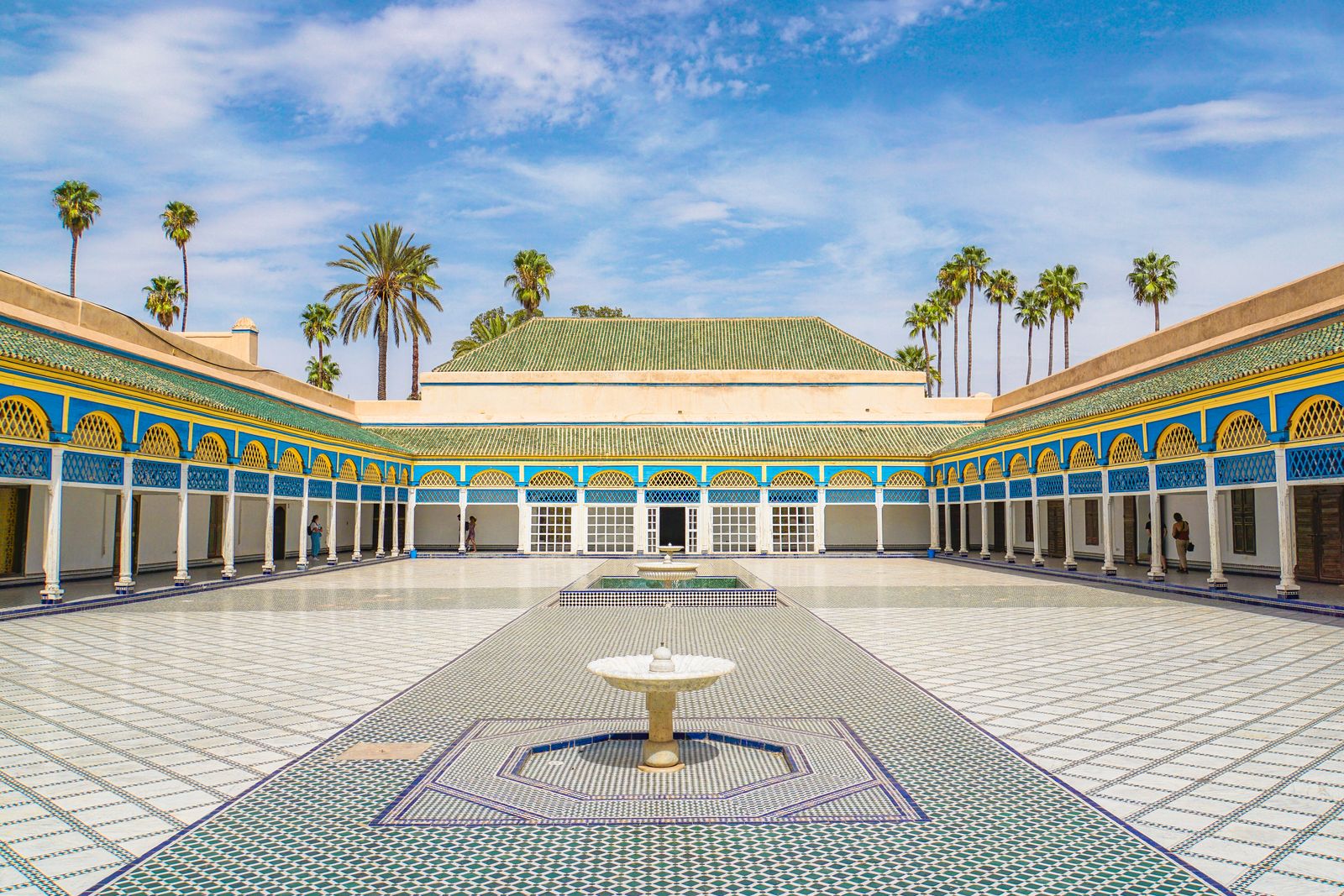
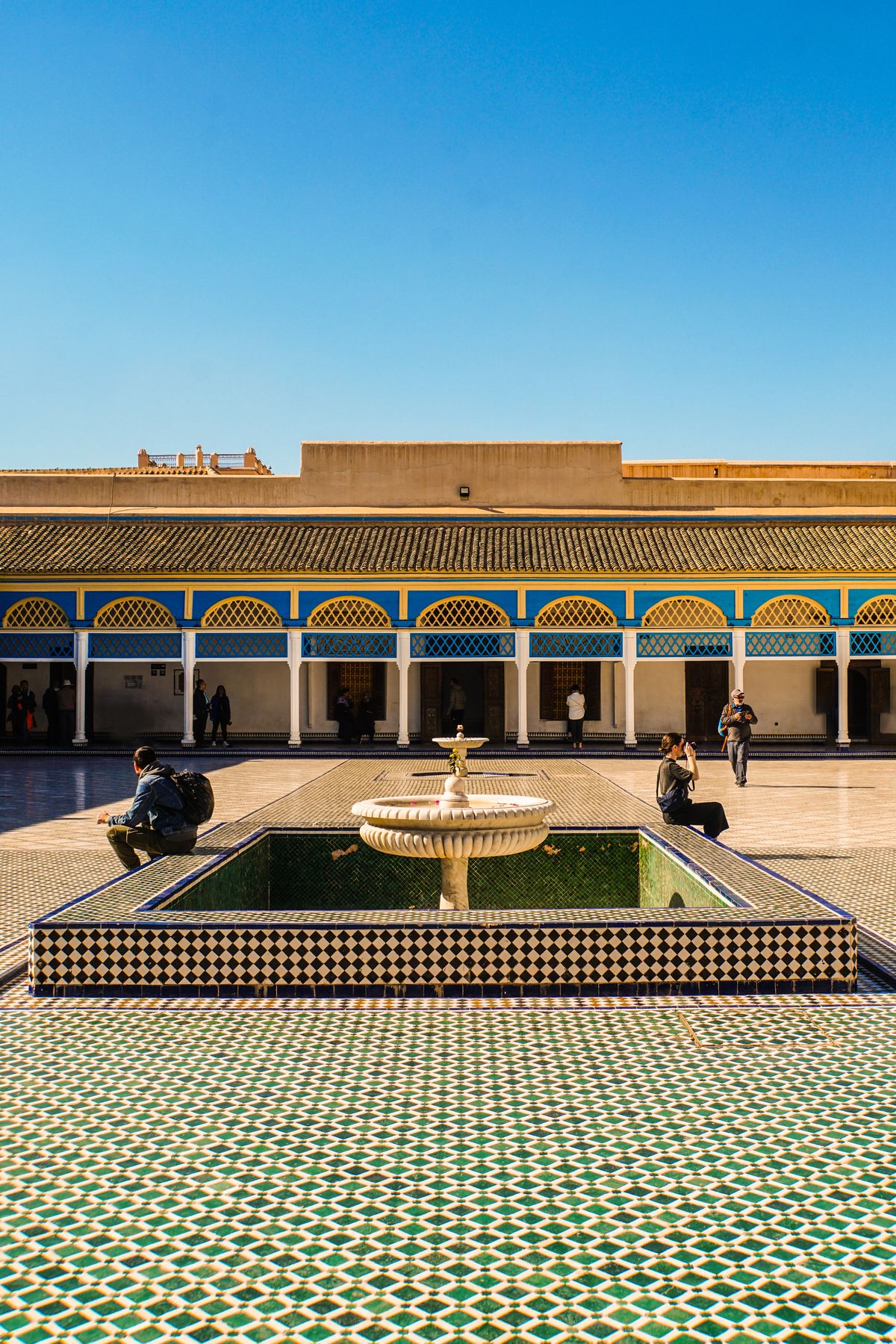
Bahia is where you go to remember that Morocco has incredible craftsmanship. The carved cedar ceilings, painted courtyards, and zellige tilework are worth an hour of your time, and it is usually calmer than Jemaa el-Fnaa. I'd pair it with El Badi Palace (the ruins are stark but photogenic) and the Saadian Tombs (small, quick, often crowded). All three sit in the southern part of the medina, so you can do them in a single morning or afternoon without backtracking across the city five times.
Majorelle Garden and the modern city
Majorelle is beautiful, but it sits outside the medina walls, which means dedicating time to get there. I'd only prioritize it if you have three days or more, or if you need a break from the sensory overload of the old city. Pair it with a walk through Guéliz (the French-built modern quarter) to see the contrast between historic and contemporary Marrakech. If you only have two days and your focus is the medina, skip Majorelle without guilt.
Where should you stay?
If you want to experience the medina properly, stay inside it or close enough to walk. Riads near Jemaa el-Fnaa put you in the thick of things—which is both the appeal and the problem, because it's loud and relentless. Riads in quieter pockets of the medina (closer to Bahia, or tucked into residential lanes) give you atmosphere without the constant hustle.
The catch: cars can't reach most medina addresses. You'll walk the last stretch with your luggage. If that's a dealbreaker, look for places near Bab Doukkala or other main gates, where taxis can drop you closer.
What's a riad, really?
A riad is a traditional Moroccan house built around an interior courtyard. Rooms face inward, which keeps them cooler and quieter. Many have been turned into guesthouses. Some are gorgeous. Some are overpriced tourist traps with "riad" in the name and zero charm. The word itself doesn't guarantee quality.
Before booking, check: How far is it from a road where taxis can drop you? Is breakfast included? Will someone meet you on arrival, or do they expect you to find a door in an unmarked alley on your first night in Morocco? These details matter more than the number of Instagram photos.
Should you stay outside the medina?
Guéliz and Hivernage have proper hotels with parking, elevators, and conventional layouts. You'll sacrifice the atmospheric old-city vibe, but gain logistical simplicity. If you're renting a car or traveling with kids, this might be the saner choice. If you're here to soak up the medina, stay in it.
What's the deal with hammams?
A hammam is a traditional bathhouse built around steam, scrubbing, and full-body exfoliation. There are two kinds in Marrakech: local neighborhood hammams where Moroccans actually bathe (cheap, utilitarian, sometimes gender-segregated, and zero English), and spa-style hammams designed for tourists (expensive, private, scripted, and often lovely).
Neither is better—they're different experiences. If you want cultural immersion and don't mind feeling clueless, try a neighborhood hammam (bring flip-flops, a towel, and ask your riad host to explain what to expect). If you want a relaxing spa treatment, book a tourist hammam and don't pretend it's an "authentic" Moroccan moment.
Marrakech hammams aren't inherently better than those in Fes or Essaouira. Quality depends on the specific place, not the city.
What is worth buying in Marrakech?
Leather bags, slippers, woven blankets, ceramics, spices, argan oil, metal lanterns, baskets. The souks are full of all of it. Some is beautiful. Some is junk marketed to tourists who won't notice the difference until they get home.
If you're buying something expensive—like a rug—visit multiple shops, ask questions, and don't rush. Vendors expect negotiation, but haggling doesn't mean playing a character. Be polite, know roughly what something should cost, and walk away if the price feels absurd.
For small items like spices or ceramics, buy what you like and don't overthink it. For big-ticket pieces, take your time. The "perfect Moroccan rug" you see in the first shop will look less perfect after you've seen six more.
How many days do you need in Marrakech?
Two days gets you the core sights if you're efficient. Three days is the sweet spot for first-timers because you can dedicate one day to the northern medina, one to the southern medina, and one to Majorelle plus a slower return to favorite spots. Four days makes sense if you want to add a day trip (Essaouira, Atlas valleys, Ourika) without sacrificing city time.
Three days in Marrakech that actually work
Northern medina & Jemaa el-Fnaa
Koutoubia briefly, then into the souks for a few hours. Return to Jemaa el-Fnaa toward sunset and eat at the food stalls or a rooftop overlooking them.
Southern medina cluster
Bahia Palace, El Badi ruins, Saadian Tombs, and the Mellah. All within walking distance. Grab lunch in the medina and leave the evening slow.
Majorelle & flex time
Majorelle Garden in the morning while it's cooler. Stroll Guéliz if you want to see modern Marrakech, or go back into the medina and revisit a favorite souk lane.
How Marrakech fits into a bigger Morocco trip
Marrakech works as a first or last stop. If you have a week, pair it with Essaouira (a few hours by road; check current coach times), as in the 7-day itinerary. If you have 10+ days, you can route through the Atlas, across to Merzouga (the desert), and up to Fes—but that's a serious road trip, and those drives are long. Don't underestimate Moroccan distances.
The classic mistake: trying to cram Marrakech, the Sahara, Fes, Chefchaouen, and the coast into 7 days. You'll spend more time in transit than anywhere else. Better to choose two or three regions and actually experience them.
What I would skip (or save for a second trip)
- Rushing through ten sights in one day just to say you saw them.
- Treating Majorelle like it's next door to Jemaa el-Fnaa (it is a short taxi ride, longer in traffic).
- Booking a "day trip to the Sahara" from Marrakech. The real Sahara around Merzouga and Erg Chebbi is a long road journey away. Any "desert" day trip from Marrakech is stopping at rocky hills closer to the city.
- Buying from the first vendor who calls you into their shop.
Source note & fact-checking
Core destination references in this guide were checked against official information from the Moroccan National Tourist Office. Time-sensitive details (opening hours, ticket prices, transport schedules) change, so always verify with official sources before traveling.