
Why accommodation choice matters more than star ratings
Morocco offers everything from traditional riads and international hotels to mountain guesthouses, desert camps and hostels. The useful question is not which type is "best" but which makes sense for each part of your trip. A medina riad in Marrakech, a business hotel near a train station and a desert bivouac are completely different experiences that suit different situations.
The Moroccan National Tourist Office lists hotels, riads, guesthouses, campsites, cottages, hostels and bivouacs among the country's accommodation options. Official accommodation overview.
Riads: what they are and when they work
A riad is a traditional house organized around an interior courtyard or garden. Many have been converted into small guesthouses. The courtyard design means rooms typically face inward, which can keep them quieter even when the medina outside is busy. Walls are thick, windows often small, and the layout emphasizes the central space rather than street-facing facades.
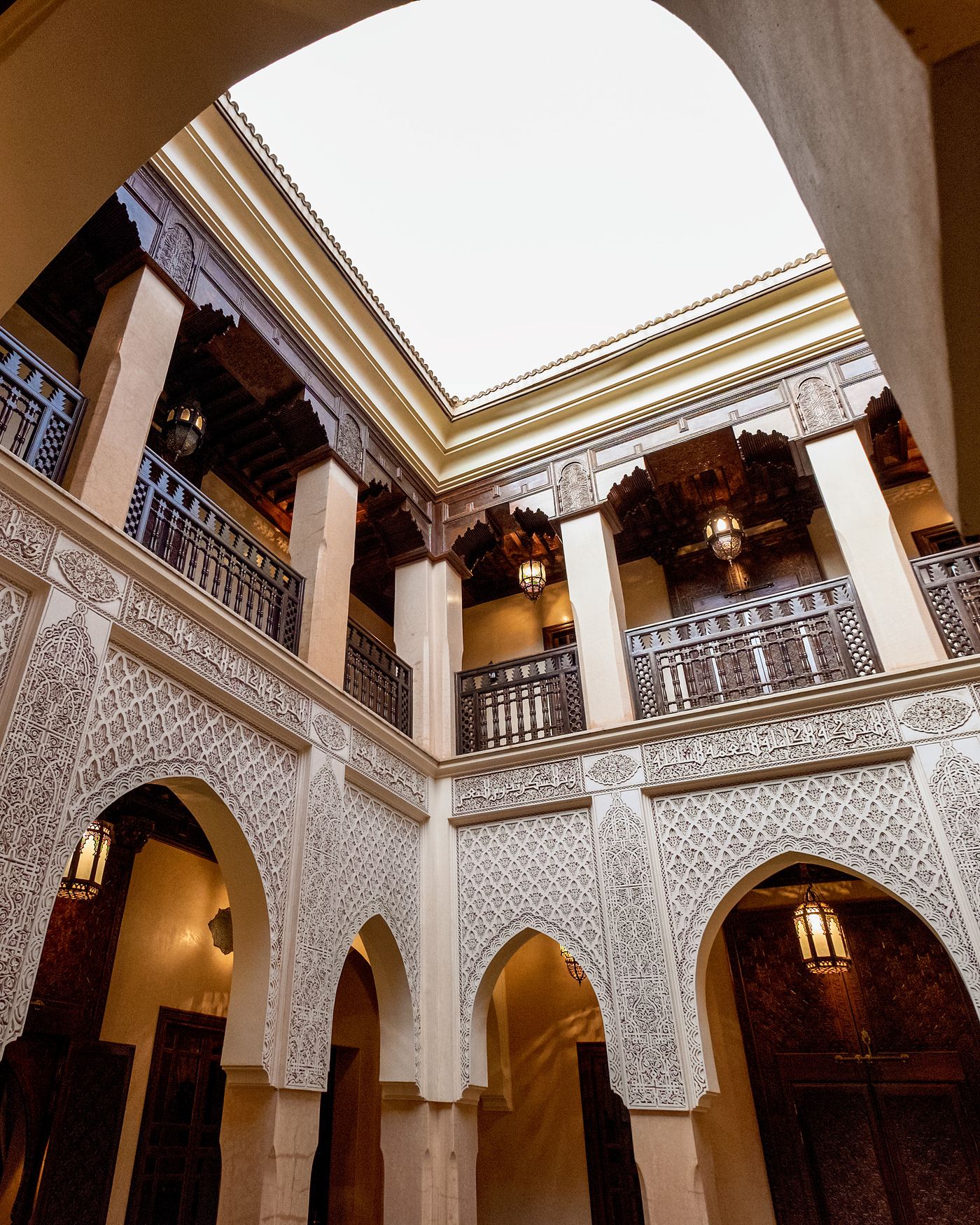
I would choose a riad when staying multiple nights in a medina and when I want the experience of that spatial layout. For one rushed overnight between long travel days, the atmosphere matters less than practical access.
What riads are not always good at
Many riads are small, which often means limited staff hours, no elevators, narrow staircases and sometimes challenging luggage access. Reception may close overnight. Breakfast timing can be less flexible than at larger hotels. Rooms vary widely in size, light and noise depending on their position within the building.
If you have heavy luggage, mobility concerns or need 24-hour reception, check these details before assuming a riad will work.
Hotels: when convenience beats atmosphere
I would choose conventional hotels when predictable vehicle access, elevators, parking, flexible check-in times or proximity to transport hubs are important. That is not settling for less—it is choosing the right tool for that particular night.
Hotels in modern districts like Guéliz in Marrakech or the Ville Nouvelle in Fes sacrifice medina atmosphere but gain logistical simplicity. If you are renting a car, this trade-off often makes sense because parking near medinas is difficult or impossible.
When hotels make more sense than riads
- Late-night or very early-morning arrivals and departures
- Traveling with rental cars and needing secure parking
- Short overnight stops between long drives
- When you need facilities like gyms, large pools or conference spaces
- If accessibility, elevators or specific room configurations matter
Location: inside the medina vs modern quarters
This is one of the most important decisions because it affects every day of your stay, not just where you sleep.
Inside the medina
Staying inside a medina puts you in the historic center where most sights, souks and traditional restaurants are located. You walk out the door into the atmosphere. The downside is vehicle access—cars cannot reach most medina accommodations, which means walking the final stretch with luggage. Some lanes are obvious and well-signed; others are confusing, especially on first arrival.
I would choose a medina location when staying multiple nights and when the main sightseeing is within the old city. I would avoid it for one-night stops with heavy bags or if I need frequent taxi access for activities outside the medina.
Near medina gates
Properties close to major medina gates offer a middle ground: proximity to the old city without being deep inside it. Taxis can drop you nearby, and the walk to your accommodation is shorter and more straightforward. This works especially well in cities like Fes where the medina is large and navigation can be challenging.
Modern quarters (Ville Nouvelle, Guéliz, Hivernage)
Modern areas have wider streets, easier taxi access, parking and a different pace. You sacrifice walking distance to medina sights but gain logistical convenience. For travelers with cars, late arrivals or those who prefer conventional hotel setups, this is often the better choice.
The mistake is assuming one location type is universally better. For three nights in Marrakech with no car, I would choose the medina. For one overnight between drives with a rental car, I would choose Guéliz or near a main road.
Guesthouses and kasbahs in the south
On road trips through the Atlas, Dades, Todra or toward Merzouga, smaller guesthouses and kasbah-style properties often provide memorable stays. They sit closer to the landscape, make early departures straightforward and often include dinner—important in areas where other dining options may be limited or far away.
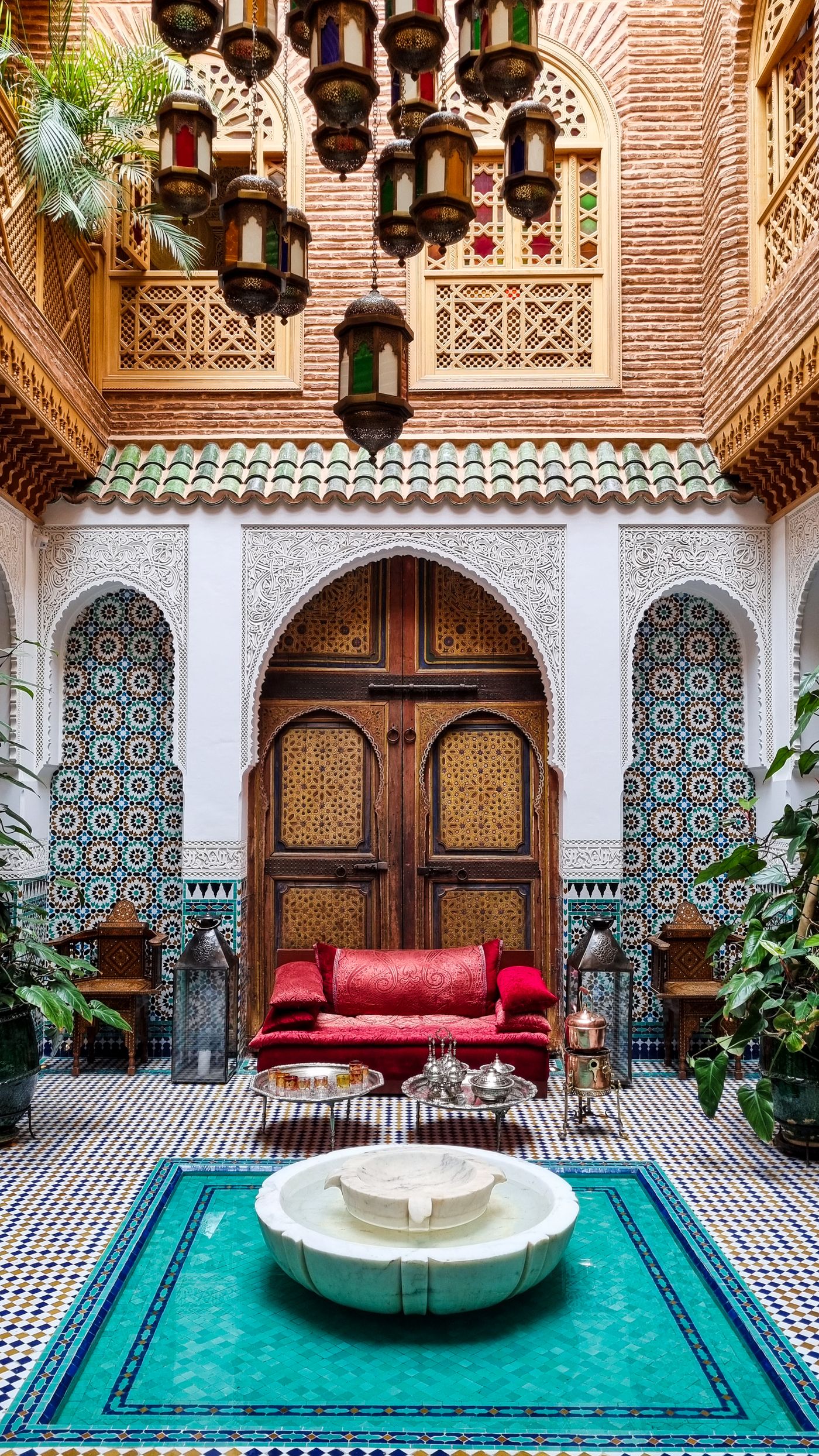
I would check dinner arrangements before arrival because some properties are isolated enough that finding food elsewhere is not realistic. Also verify parking, breakfast timing and whether the property can accommodate early departures if your route requires it.
Desert camps: comparing atmosphere and practicality
Desert camps around Merzouga range from simple setups with shared facilities to upscale operations with private bathrooms, electricity and elaborate meals. Before booking, I would want to know:
- How many tents are in the camp
- Whether bathrooms are private or shared
- How the transfer from Merzouga village to camp works
- What meals are included
- Whether bedding is adequate for the season (nights can be cold)
- How far the camp sits from other camps (isolation vs convenience)
- What happens in case of weather disruptions
One night or two around Merzouga?
I would consider spending one night in a standard guesthouse or hotel in Merzouga village and one night in a camp. That combination makes arrival and departure less rushed, gives you a secure base for main luggage, and lets you pack light for the camp overnight. See our desert route guide for how this fits into a longer trip.
What "luxury" desert camp actually means
The term luxury is used inconsistently. It might refer to private bathrooms, decorative interiors, electricity, hot water, larger tents, better bedding or simply higher prices. I would read the specific inclusions and recent reviews rather than relying on marketing labels.
Some travelers prefer simpler camps that emphasize the landscape and isolation. Others want maximum comfort. Neither is wrong, but the choice should be deliberate rather than based on glossy photos alone.
What changes by destination
Marrakech
Marrakech has the widest range of accommodation types. Medina riads suit multi-night stays focused on the old city. Guéliz and Hivernage hotels work better for car-based trips or if you prefer modern amenities. Check our Marrakech guide for location advice.
Fes
The Fes medina is larger and more complex than Marrakech. I would prioritize location near Bab Bou Jeloud or other well-known gates unless you are confident navigating narrow lanes with luggage. The Ville Nouvelle offers easier access but longer walks to medina sights.
Chefchaouen and Essaouira
Both towns are smaller and easier to navigate than Fes or Marrakech, so medina accommodation often works well. The difference is terrain: Essaouira's medina is flat and compact, while Chefchaouen's lanes climb and turn into steps, so the walk from the nearest drop-off point matters more there. Check our Essaouira and Chefchaouen guides for specifics.
Merzouga and desert areas
Accommodation splits between village-based guesthouses and desert camps. Village properties offer practicality and vehicle access; camps offer the dune experience. Many travelers combine both.
Atlas valleys and mountain areas
Small guesthouses and mountain lodges are the norm. Verify heating for winter travel, confirm meal availability and check road access if traveling in poor weather.
What to check before booking
These details make more difference to the actual stay than decorative photos:
- Exact location and vehicle access: How far from where a taxi can drop you? Is someone available to meet you on arrival?
- Stairs and accessibility: Are there stairs? How many? Is there an elevator?
- Climate control: Air conditioning in summer? Heating in winter? Not all properties have both.
- Hot water: Is it reliably available? Some older properties have limited capacity.
- Breakfast: Included? What time does it start? Can it accommodate early departures?
- Dinner: Available on-site or nearby? Essential in isolated locations.
- Parking: If you have a car, where do you actually park? Is it secure?
- Reception hours: Is there 24-hour reception, or do you need to coordinate arrival times?
- Noise: Do rooms face a busy street? Open onto a central courtyard where sound carries? Near a mosque with dawn calls to prayer?
- Cancellation policy: What are the terms if plans change?
Luggage access rule: Before booking any medina property, verify the walking distance from the nearest vehicle access point and whether help with bags is available.
Pools and terraces: managing expectations
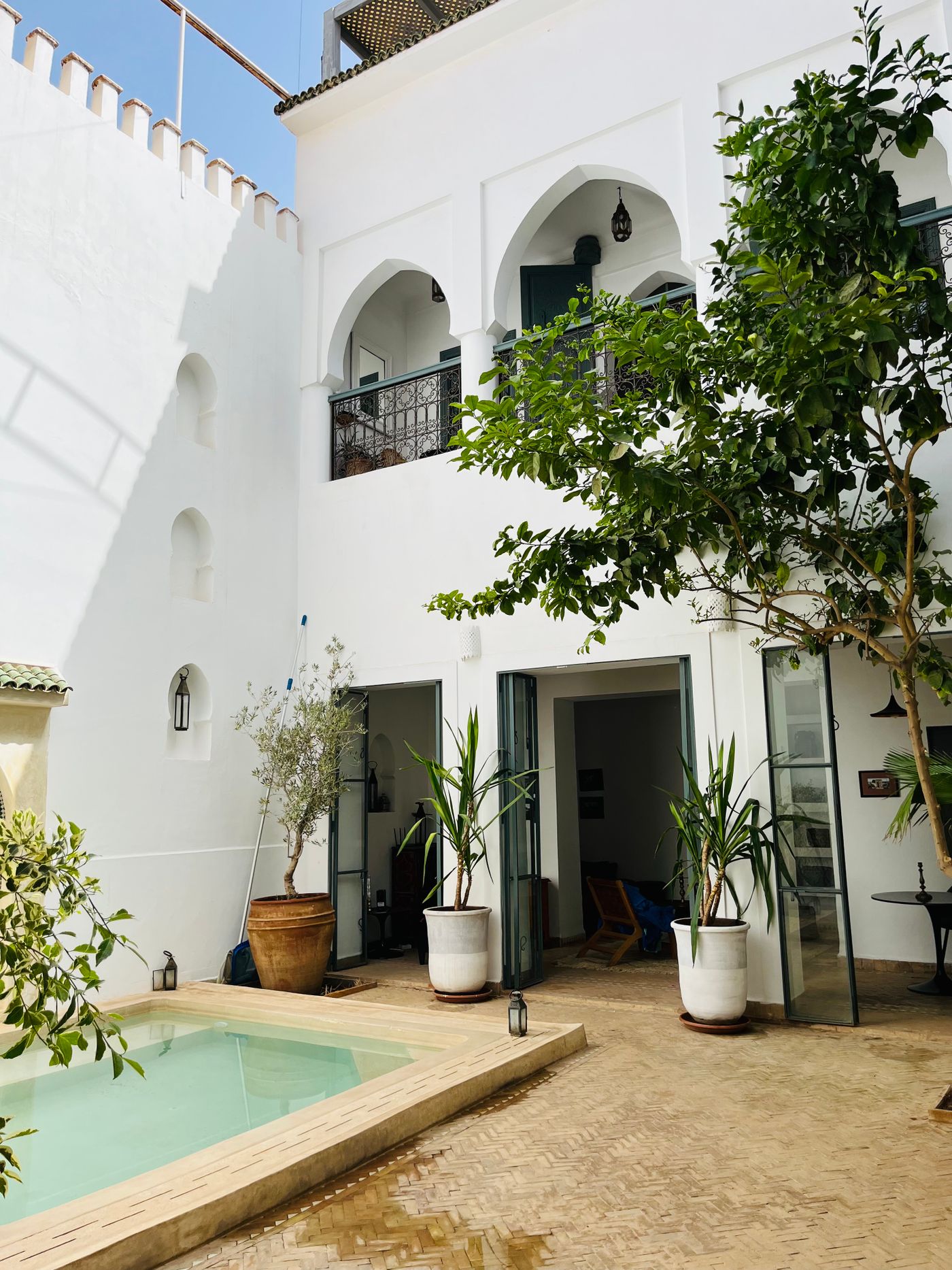
Many riads advertise pools or rooftop terraces. Medina courtyard pools are often small plunge pools rather than swimming pools—beautiful but not for laps. Rooftop terraces vary wildly in size, privacy, furniture and sun exposure. If these features matter to your stay, check dimensions and recent photos from guests rather than relying on wide-angle marketing shots.
Breakfast and dinner: when they change the value
Breakfast is commonly included at many riads and guesthouses, though not universal. When it is included, that removes one meal cost and simplifies the morning. Check what time breakfast starts—some properties serve late, which does not work for early-departure days.
Dinner availability matters more in remote locations. A property that seems expensive may be better value once included meals, isolation and lack of nearby alternatives are factored in.
Budget, mid-range and higher-end: what changes
For the wider trip budget beyond accommodation, see the Morocco travel costs guide.
Accommodation spans a wide range, and the differences go beyond just price:
Budget accommodation
Hostels, basic guesthouses, simple riads. Shared bathrooms are common in hostels. Breakfast may or may not be included. Furnishings are functional. Location can be deep in medinas where access is tricky. Quality varies significantly—reviews matter more than photos at this level.
Mid-range accommodation
Comfortable riads in good locations, small hotels, well-maintained guesthouses. Private bathrooms. Breakfast is commonly included, but not universal. This is where properties start having genuine character beyond functional rooms. Staff are more available, and facilities like climate control are more reliable.
Higher-end accommodation
Boutique riads, luxury hotels, upscale desert camps. Superior locations, better service, more amenities. Pools, terraces, in-house dining and concierge services are more commonly available. At this level you are paying for both comfort and convenience—transfers, meal quality and staff availability improve significantly.
The jump from budget to mid-range can bring a noticeable improvement in practical comfort. The jump from mid-range to high-end adds polish and service but may matter less if you spend most of your time outside the accommodation.
Common accommodation mistakes
- Booking purely on photos: Wide-angle shots make rooms and pools look much larger than they are.
- Ignoring location logistics: The cheapest beautiful riad is not good value if its location fights your itinerary every day.
- Assuming all riads have elevators: Many traditional riads do not have elevators. If stairs are a problem, verify before booking.
- Choosing deep medina locations with heavy luggage: Long walks through confusing lanes with bags is miserable.
- Renting a car and booking inside a medina: Where will you actually park? Have you checked?
- Not checking climate control for season: Summer without AC or winter without heating ruins the stay.
- Not verifying breakfast timing: If breakfast starts at 9 a.m. and you need to leave at 7 a.m., that is a problem.
- Ignoring recent reviews about noise: A room can look perfect and still be impossible to sleep in.
How far ahead to book
If there is a specific riad, camp or small guesthouse you especially want, book it earlier—these fill faster than generic hotels. For standard city hotels, you have more flexibility. Popular travel periods, often spring and autumn, may require more advance planning. See our seasonal guide for timing advice.
I would prioritize booking your most important stays first (the multi-night city stops, the desert camp, any particularly special property), then fill in the practical overnight stops later.
Mixing accommodation types makes sense
For a first Morocco trip, I would use several accommodation types rather than repeating the same experience every night. A possible mix:
- A medina riad in Marrakech (2-3 nights)
- A road-accessible guesthouse in Dades or Todra (1-2 nights)
- A desert camp around Merzouga (1 night) plus a village guesthouse (1 night)
- A medina riad or small hotel in Fes (2-3 nights)
That approach makes accommodation part of experiencing different parts of Morocco rather than just where you sleep between activities.
One-night stops need different priorities
For a one-night road-trip stop, I would prioritize access, parking, dinner availability, breakfast timing and how quickly departure can be managed in the morning. I do not need the most atmospheric property in the region—I need something practical that does not add friction to a travel day.
For multi-night stops in Marrakech or Fes, atmosphere, walkability and immersion in the medina become much more important. The right accommodation choice depends entirely on how you will actually use it.