How getting around Morocco actually works
For the practical side of renting and using a car, see driving in Morocco.
There is no single best way to travel around Morocco. Use trains when the rail network makes sense, coaches when the railway stops being useful, and road transport for the Atlas, southern valleys and Sahara. Trying to force the whole country into one transport method usually creates more hassle than it solves.
If you are working out how to get around Morocco, start with the route rather than the vehicle. Tangier, Rabat, Casablanca, Marrakech and Fes fit naturally into rail-based travel. Merzouga, Dades, Todra and Aït Ben Haddou do not.
Trains: the first option between major cities
Morocco's rail system is run by ONCF. The official tourism office notes that the high-speed service connects Tangier, Kenitra, Rabat and Casablanca, while conventional trains serve a much broader part of the network. Rail is especially useful when it avoids city traffic and gets you close to the next stop.
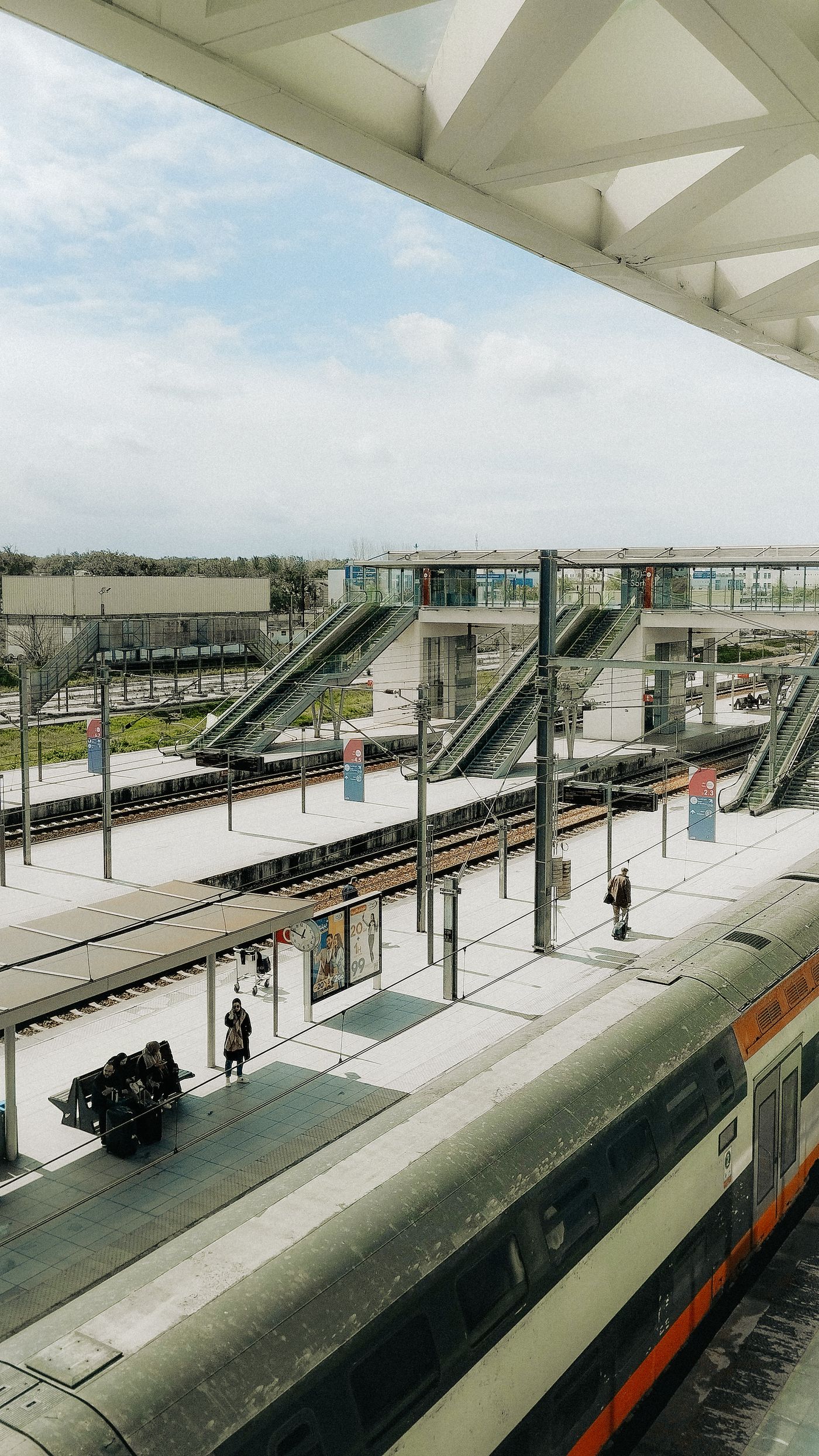
For Marrakech to Casablanca, Rabat or Fes, I would look at the current ONCF timetable before booking anything else. Do not hard-code departure times into an itinerary weeks in advance because schedules can change. Check again close to travel.
The same applies to high-speed services. The infrastructure is excellent for a north–Casablanca axis, but I would still choose the train because of the route, not because it is labelled high-speed.
Coaches: useful when the rail network ends
Long-distance coaches matter much more in Morocco than many first-time visitors expect. CTM sells intercity coach tickets online, and Supratours is specifically used to extend journeys beyond railway stations. That makes coaches especially useful for cities and towns that are not on the rail network.
I would treat coach days like train days: one main transfer, not three separate connections plus sightseeing. If the journey takes a large chunk of the day, do not expect the arrival evening to also contain half a city.
Trams and local transport
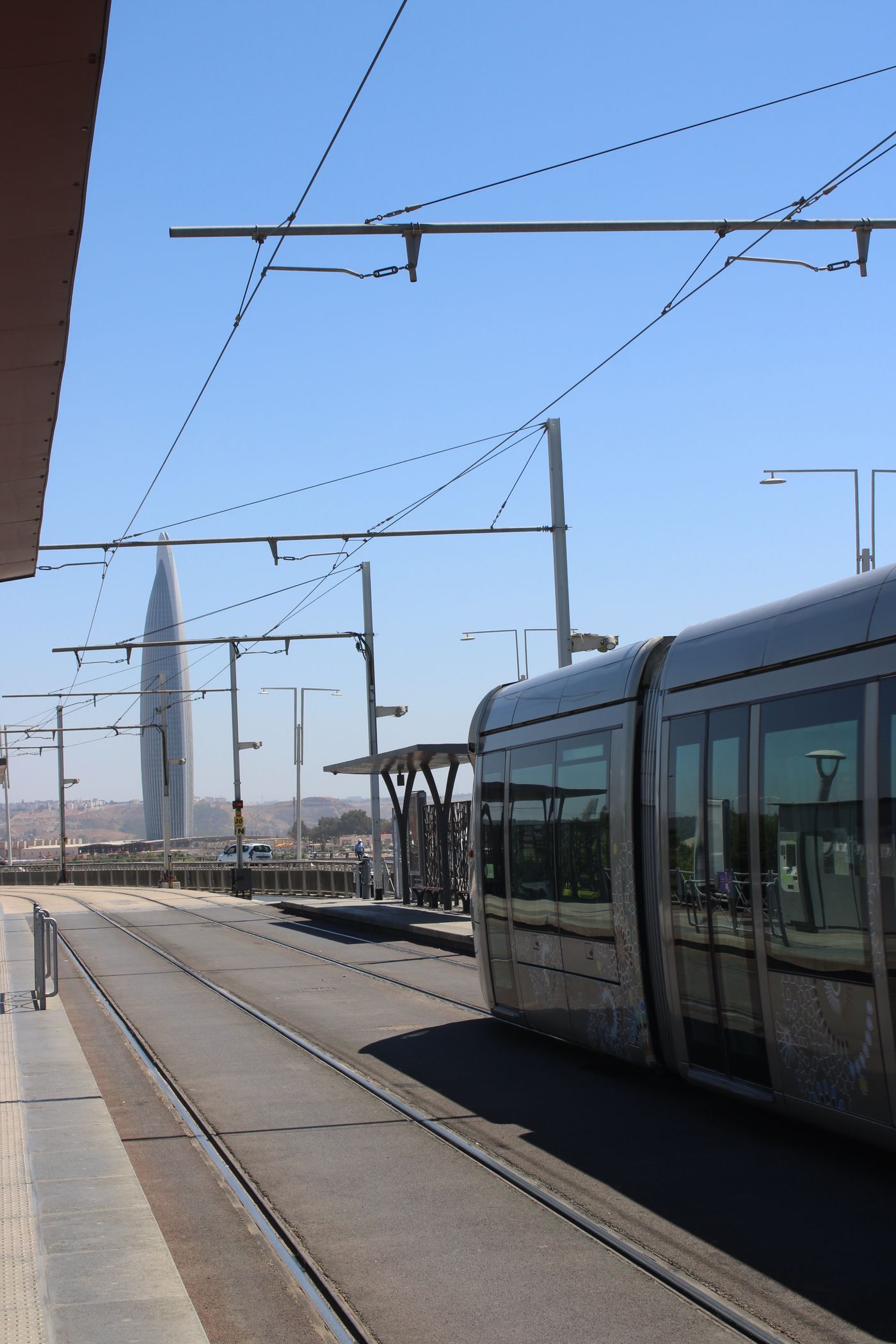
Rabat and Casablanca have tram systems, and they can be genuinely useful when your accommodation and destination line up with the network. The national tourism office also lists taxis and buses as standard urban options.
In medinas, walking is still the default. A taxi gets you to a gate, square or nearby road; it does not magically make narrow medieval lanes accessible by car.
Grand taxis and small taxis
Taxi systems can feel confusing at first because local practice varies by city. The simplest approach is to ask the accommodation what the normal local system is before you need the ride. That avoids trying to learn the rules with luggage in hand at a station exit.
For airport arrivals, check the official or clearly signed transport options before walking away with the first person who approaches you.
When road transport takes over
The moment the itinerary moves south through the Atlas toward Aït Ben Haddou, Dades, Todra or Merzouga, road travel becomes the real backbone of the trip. This is where rail timetables give way to driving hours, mountain conditions and daylight.
A rental car gives the most freedom. A private driver reduces fatigue. An organised transfer is easiest if you do not want to handle any logistics yourself. All three can work; the right answer depends on how much independence you want.
Do I need a car for Morocco?
No. I would not rent one just because I was visiting Morocco. For a city-heavy itinerary, a car can sit parked while you pay for it and worry about access. For a southern loop, it can transform the trip.
The question I would ask: will the car improve at least half of the route? If not, rent it only for the section where it actually helps.
Flights inside Morocco
Domestic flights exist and can be useful for very long jumps, but I would not build ordinary itineraries around them unless the distance saved is substantial. Airports add transfer time, check-in time and another layer of logistics. For many classic routes, train plus road travel remains more coherent.
What to book ahead
I would book transport early when the exact departure matters, when travelling in a busy period or when missing one connection would damage the rest of the itinerary. For flexible city days, leave more room.
- Check ONCF directly for current train times.
- Check CTM or the relevant coach operator for current coach services.
- Confirm airport transfers before a late arrival.
- Leave extra time around long road legs and mountain crossings.
One more thing: build in transfer margin
The detail travellers most often underestimate is the gap between an advertised journey time and the time a travel day actually consumes. Getting to a station, waiting, collecting luggage, finding a taxi at the other end and checking into accommodation all add up. Leave margin around every important connection, especially when changing transport modes.
That buffer is not wasted time. It is what keeps a delayed train, slow traffic or a longer-than-expected taxi ride from turning the rest of the day into a problem. On a Morocco itinerary with several cities, a little slack in the schedule makes the whole trip feel much easier.
What I would do on a first trip
For a classic first route, I would happily combine train and road: rail for the northern and major-city sections, then a car, driver or organised transfer for the south. That is the version of getting around Morocco that feels most natural to me because each transport mode is being used where it is strongest.
The mistake is assuming that because one train ride is easy, every destination should be reached by train—or that because a car is useful in the Atlas, you should keep it while staying three nights inside a medina. Morocco becomes much easier once you stop looking for one transport answer for the entire country.