
What I would actually eat on a first trip to Morocco
If I had to give one rule for Moroccan food, it would be this: do not spend the whole trip ordering the same chicken tagine because it was good on day one. Moroccan cooking changes by region, by household and by the kind of place serving it. The country’s official tourism material highlights tajine, couscous, pastilla, harira and mint tea for a reason, but those are only the starting points.
I also would not judge the food by one tourist-heavy square or one polished restaurant. Some meals are memorable because the setting is beautiful; others are good because the kitchen has been making the same dish for years and does not need to decorate the plate for visitors.
Couscous: the dish I would not reduce to a side
People often think of couscous as the small grains themselves, but in Morocco the full dish is the important thing. The Moroccan National Tourist Office describes couscous as a staple with Amazigh roots and notes that it is traditionally eaten on Fridays. Versions vary with meat, vegetables, fish, chicken and even sweet preparations. Official Moroccan food guide.
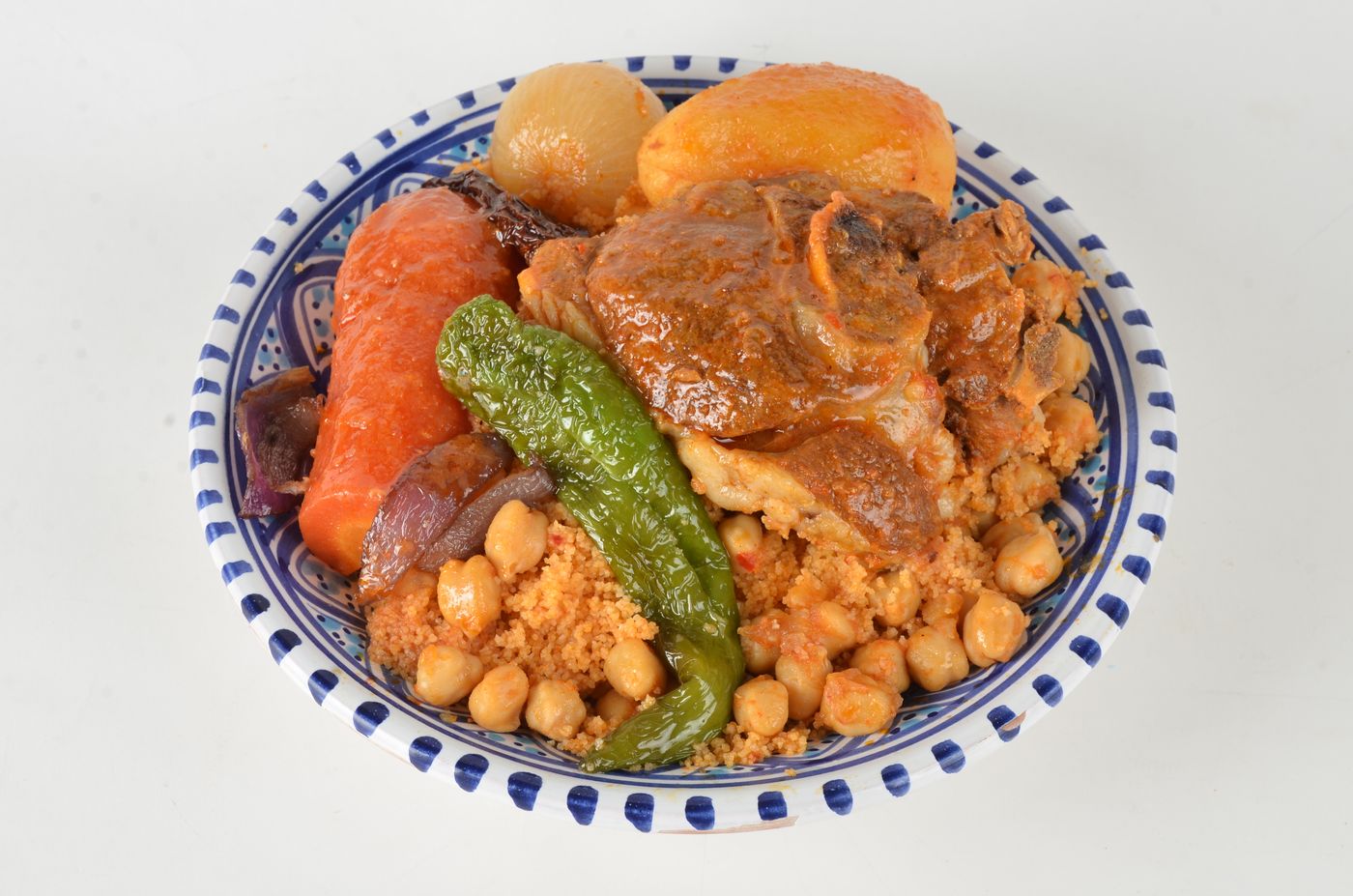
If someone asks for the national dish of Morocco, couscous is one of the strongest answers, but I would not obsess over labels. What matters for a traveller is understanding that this is a shared, substantial meal, not just something scattered beside grilled meat.
Tajine: one cooking method, many meals
Tajine is another word visitors sometimes misunderstand. It refers both to the distinctive earthenware vessel and to the slow-cooked dish prepared in it. The official tourism office lists combinations involving meat, fish, chicken, vegetables, dried fruit and nuts, which is exactly why ordering “a tajine” does not tell you much about what you are going to eat.
It is worth varying it across the trip. A vegetable tajine in the Atlas, lamb with prunes in a city and fish on the coast can feel like three completely different dishes. That variety is part of the point.
Pastilla: when sweet and savoury meet
Pastilla is one of the dishes I would specifically look for because it is not as easily replaced by something similar at home. The pastry is crisp, the filling can be rich and savoury, and the use of sugar and cinnamon creates the contrast that makes it memorable.
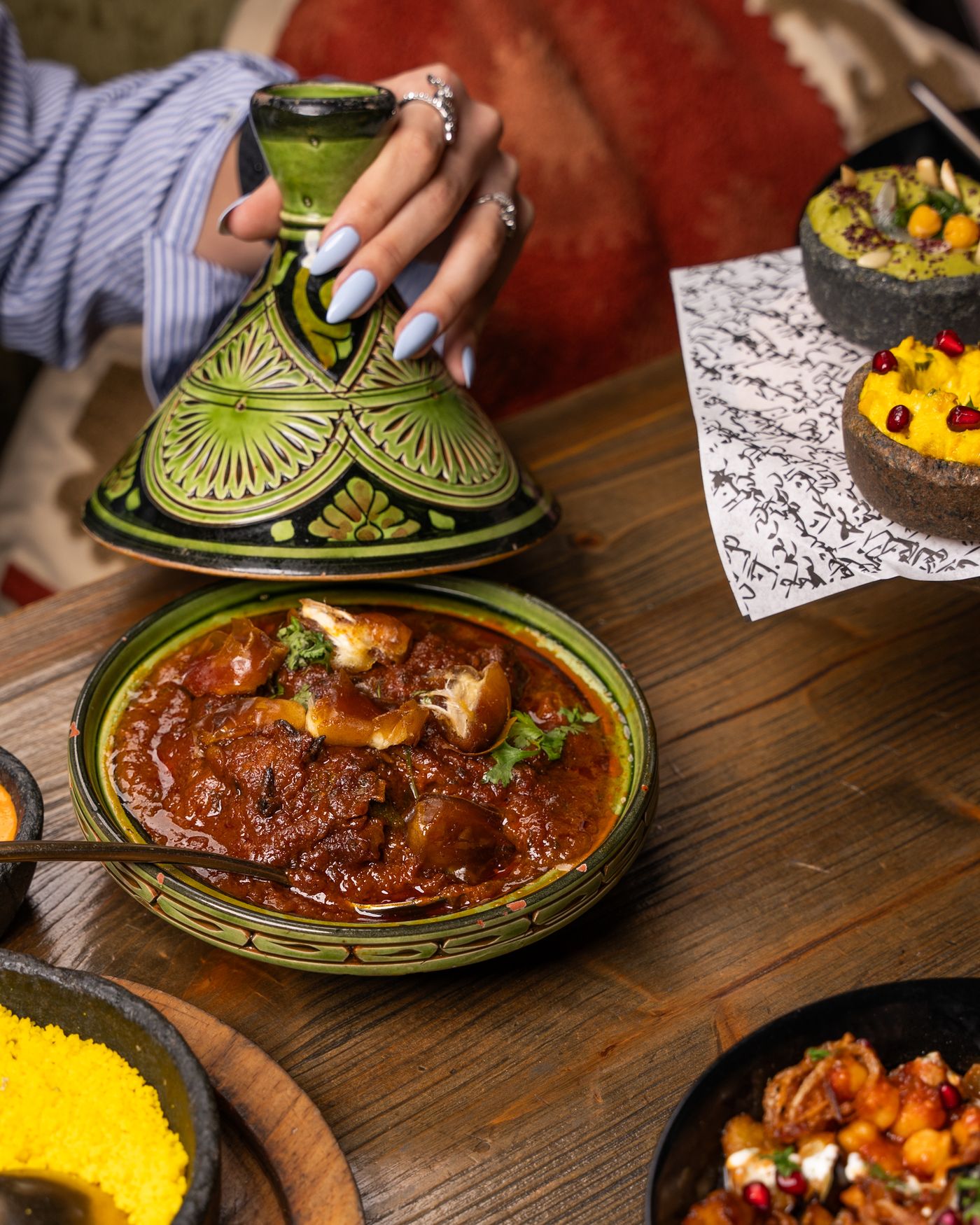
It is also a good example of why Moroccan cuisine is broader than the stereotypical “spices and tagine” summary. The national tourism office describes the country's cooking as drawing on Amazigh, Arab-Andalusian and Jewish traditions, with strong regional variation.
Harira: the bowl I would order when I want something simple
Harira is a tomato-based soup commonly made with pulses and other ingredients. It is strongly associated with Ramadan and breaking the fast, but you will also see it outside that context. It is one of those dishes that can be comforting without turning into a heavy restaurant meal.
On a travel day, that matters. Not every lunch needs to become a two-hour event just because you are in Morocco.
Mint tea is not just another drink
Green tea with mint is everywhere, but the useful thing to understand is the social role around it. The official tourism office describes mint tea as a ceremonial drink associated with hospitality and welcoming guests. That does not mean every cup you are offered carries deep symbolism, but it does explain why tea appears so often in shops, riads and homes.
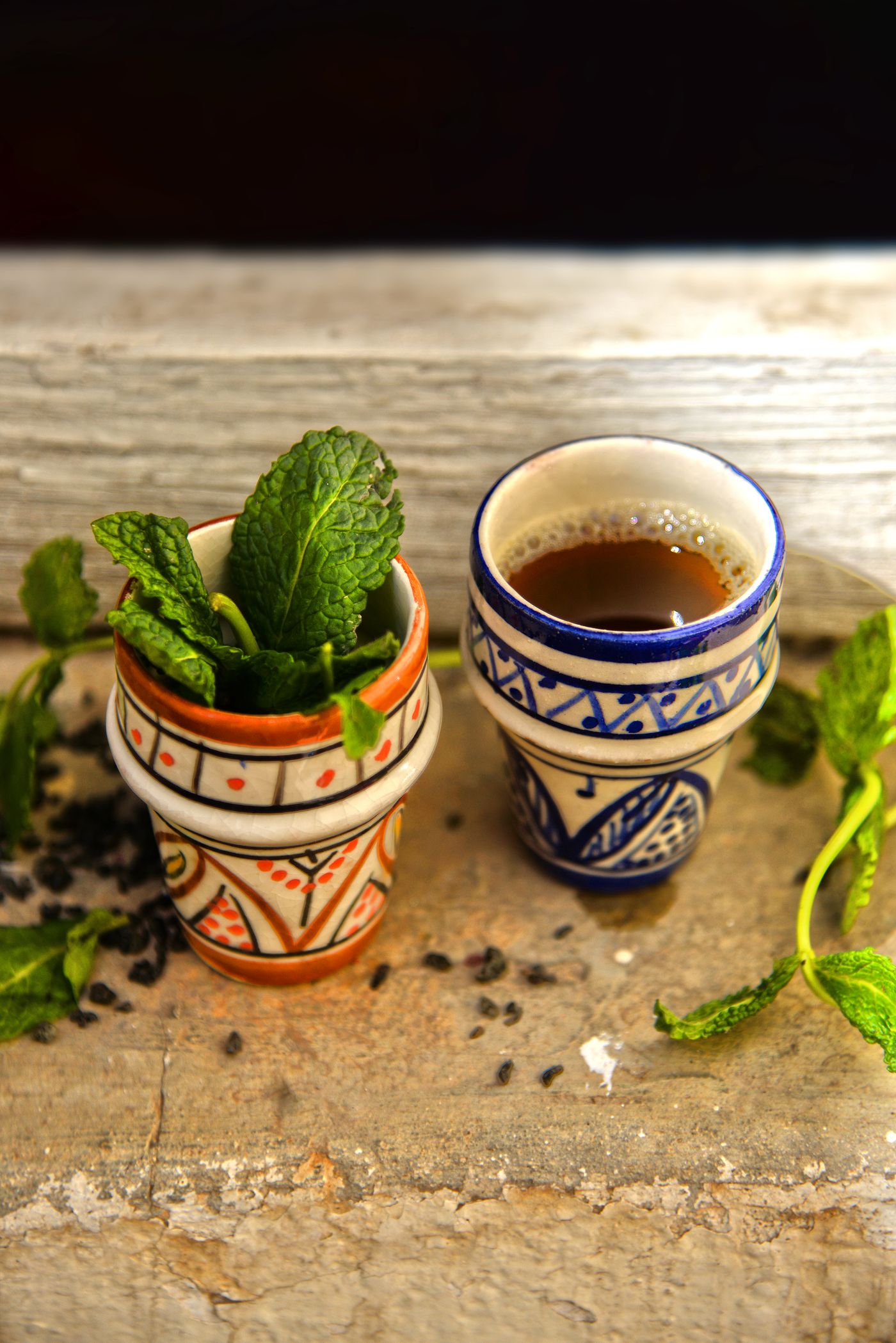
There is no need to worry about drinking it “correctly.” It is usually sweet, often very sweet, and accepting a glass can mean slowing down for a few minutes instead of treating every interaction as a transaction.
Breakfast varies by region and property
Riad breakfasts can include bread, msemen or other pancakes, jam, honey, olive oil, eggs, fruit, coffee and tea. The exact combination varies. I would not choose accommodation just because a breakfast photograph looks generous, but when breakfast is included it can make the morning much easier.
On road-trip days, I would ask what time breakfast starts. There is no point paying for an included meal that appears an hour after you need to leave.
Moroccan pastries: better sampled than attacked
Chebakia, ghriba, gazelle horns and many other sweets are part of the food landscape, especially around celebrations and Ramadan. Some are intensely sweet, which is why I would prefer trying several over the course of a trip rather than buying a giant box on the first afternoon.
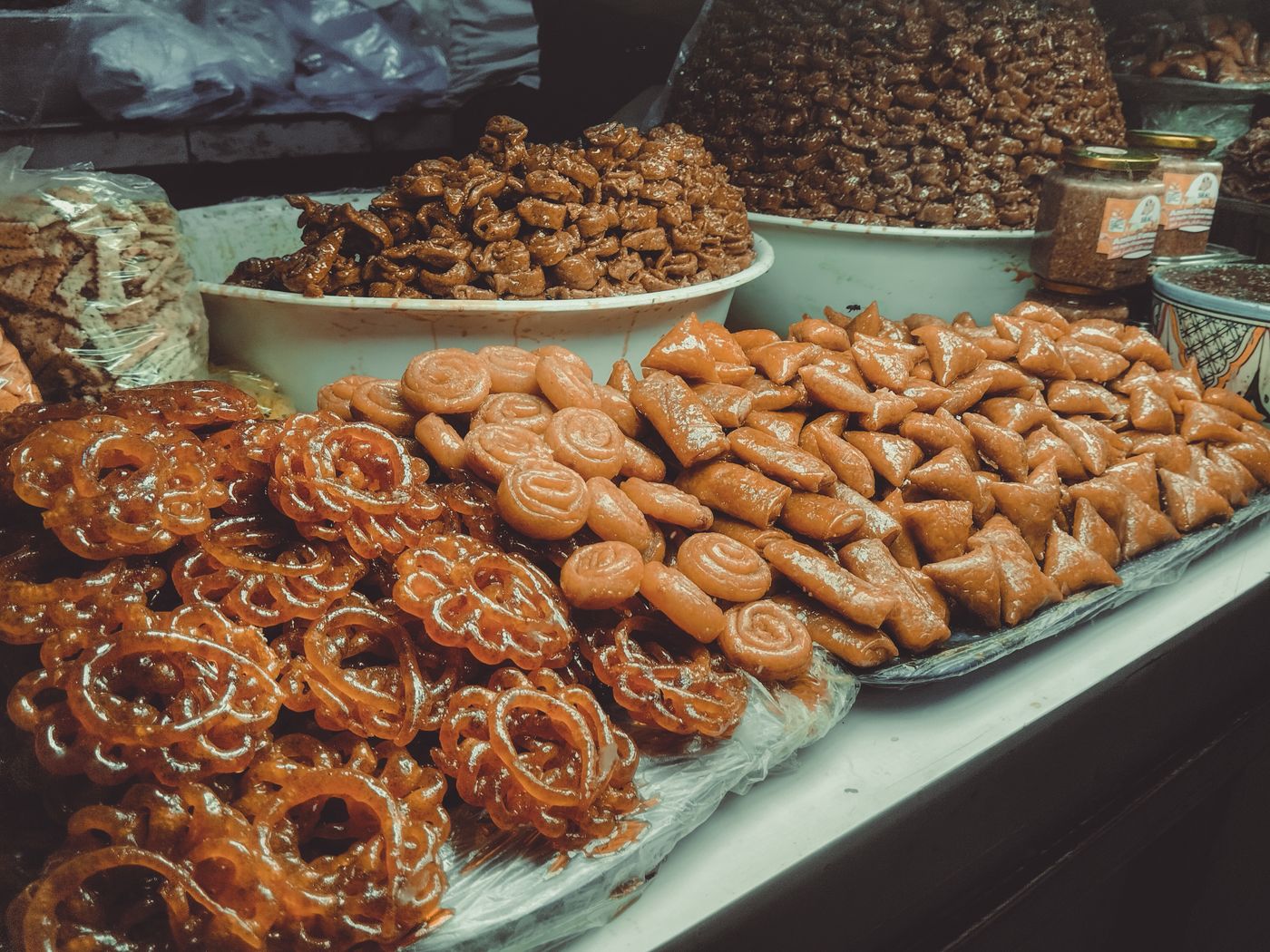
The official tourism office specifically highlights chebakia, gazelle horns and ghriba among common Moroccan pastries.
Markets are useful, but there is no need to buy every spice
Spice displays are photogenic and part of medina life, but dramatic health claims or mystery mixtures sold to visitors deserve some scepticism. Buy what you recognise and genuinely plan to use.
Cumin, coriander, cinnamon, saffron and ras el-hanout are all associated with Moroccan cooking, and the national tourism office notes their presence in markets and supermarkets.
Street food: look at turnover before anything else
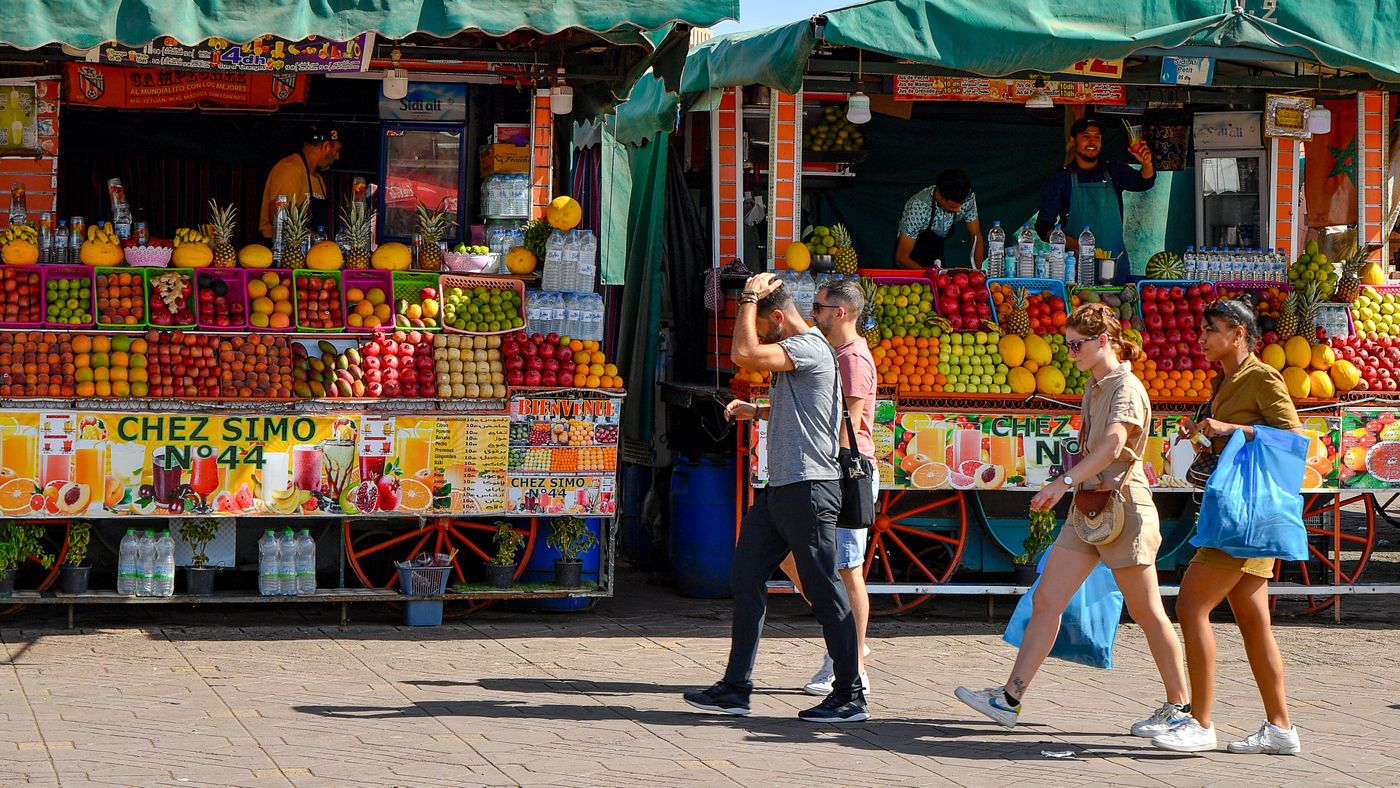
At a busy stall, pay attention to turnover. Food that is constantly being cooked and replaced is a better sign than trays that appear to have been sitting for hours. I would also look at what the vendor is actually serving well rather than ordering the longest menu because it feels safer.
Jemaa el-Fnaa is one obvious place to experience evening food stalls, and official Moroccan tourism material specifically mentions juices, grilled meats, fish and other street foods there.
My food rule: I would rather eat one thing from a busy stall that clearly specialises in it than ten different things from a place trying to sell everything.
Regional differences make the same dish worth trying twice
Food on the Atlantic coast, in Fes, in the Atlas and around Marrakech does not need to taste identical. That is exactly why familiar dishes can still be worth ordering in different regions. A fish tagine in one region and a lamb tagine elsewhere are not repetitions in the way a fast-food meal would be.
The official tourism office also points to regional products such as goat cheese in the north (it often appears on menus in Chefchaouen) and different couscous or tagine traditions in Atlas areas.
What I would order on a first week
- One proper couscous meal rather than treating it as a side dish.
- At least two different tajines in different places.
- Harira on a day when I want something simple.
- Pastilla once, preferably somewhere known for it, such as Fes.
- Mint tea without counting how many glasses I have already had.
- A small selection of pastries rather than one enormous dessert order.
- Seafood if the route reaches Essaouira or another Atlantic stop.
How to avoid turning food into another checklist
Keep a short list of dishes you want to try and let the route decide where they happen. There is no need to cross a city for one specific plate unless the restaurant itself is part of the plan. That keeps eating connected to the trip rather than making the whole day revolve around reservations.
For me, a useful Morocco food guide should help you recognise what is in front of you and know what is worth trying. It should not make you feel that the trip failed because you missed one pastry or did not photograph the “perfect” tajine.